


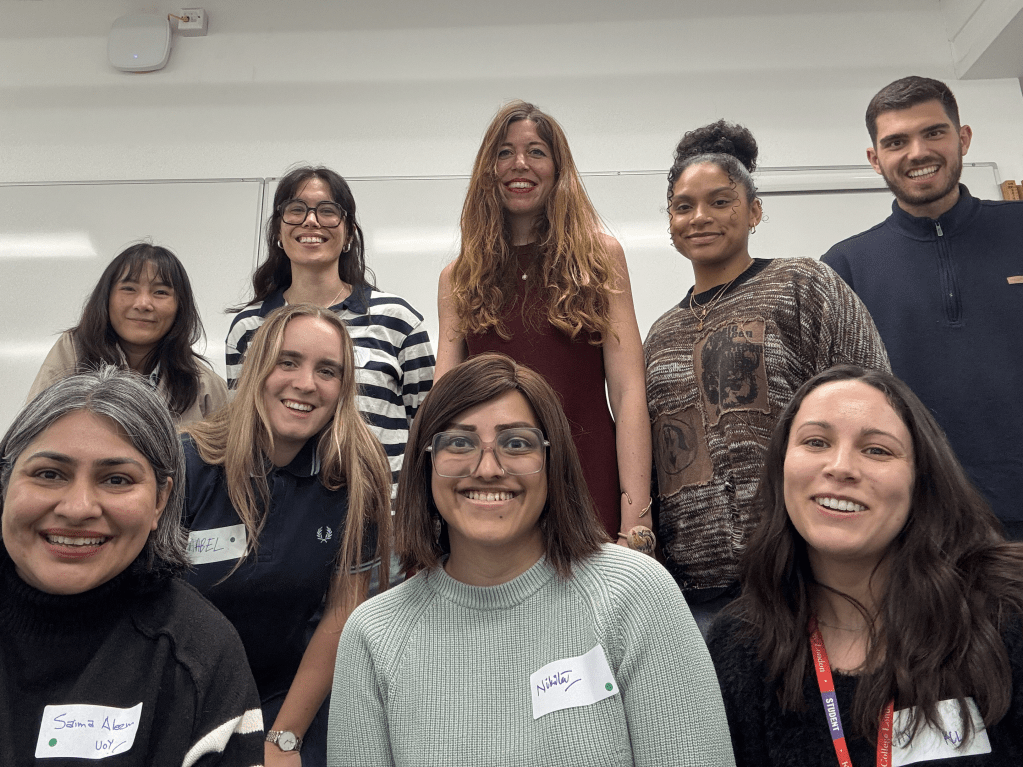
2pm-4pm, 4th March, 2026
Franklin Wilkins Building, King’s College London
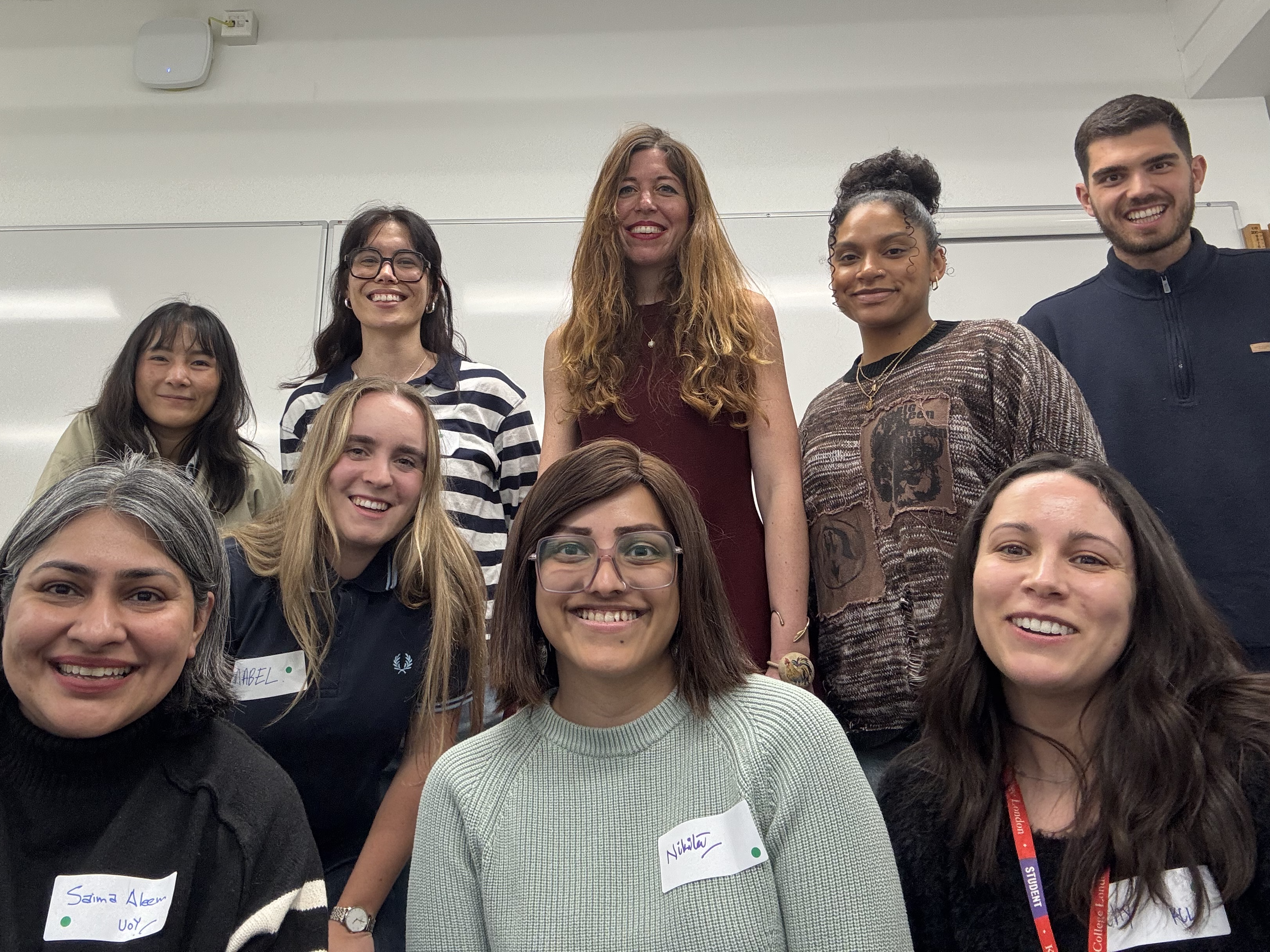
Our March session of the PhD Participatory Research Network brought together PhD students from King’s College London, Queen Mary University of London, Imperial College London, and the University of York.
Creative Methods in Participatory Research
This session was hosted by Dr Aoife Sadlier, Participatory Research Officer at Queen Mary University of London.
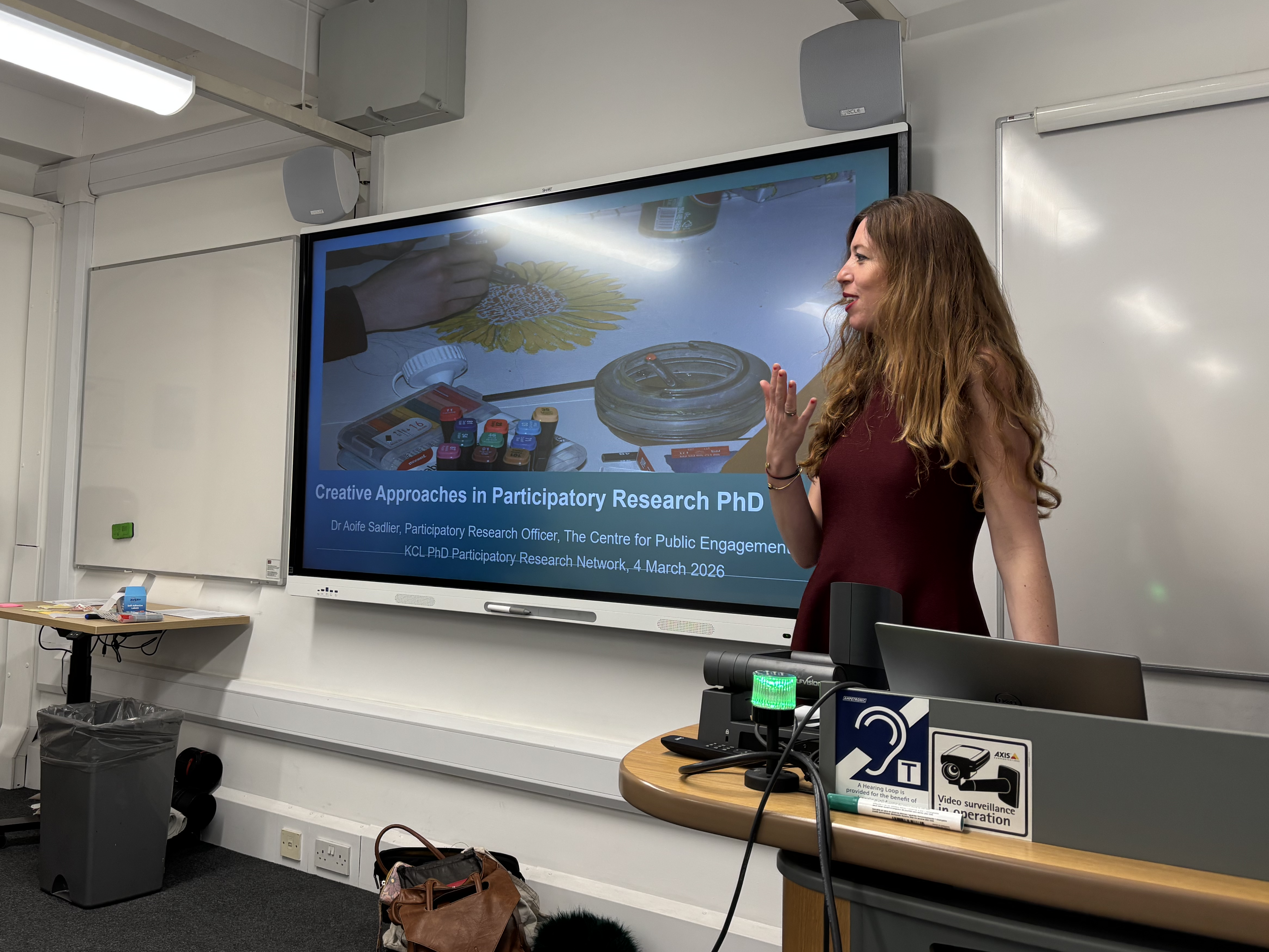
Aoife began by introducing how creative and participatory methods can be particularly valuable when exploring sensitive topics or working with marginalised communities. She emphasised that while creative methods can open up new forms of expression and engagement, they also come with practical and ethical considerations.
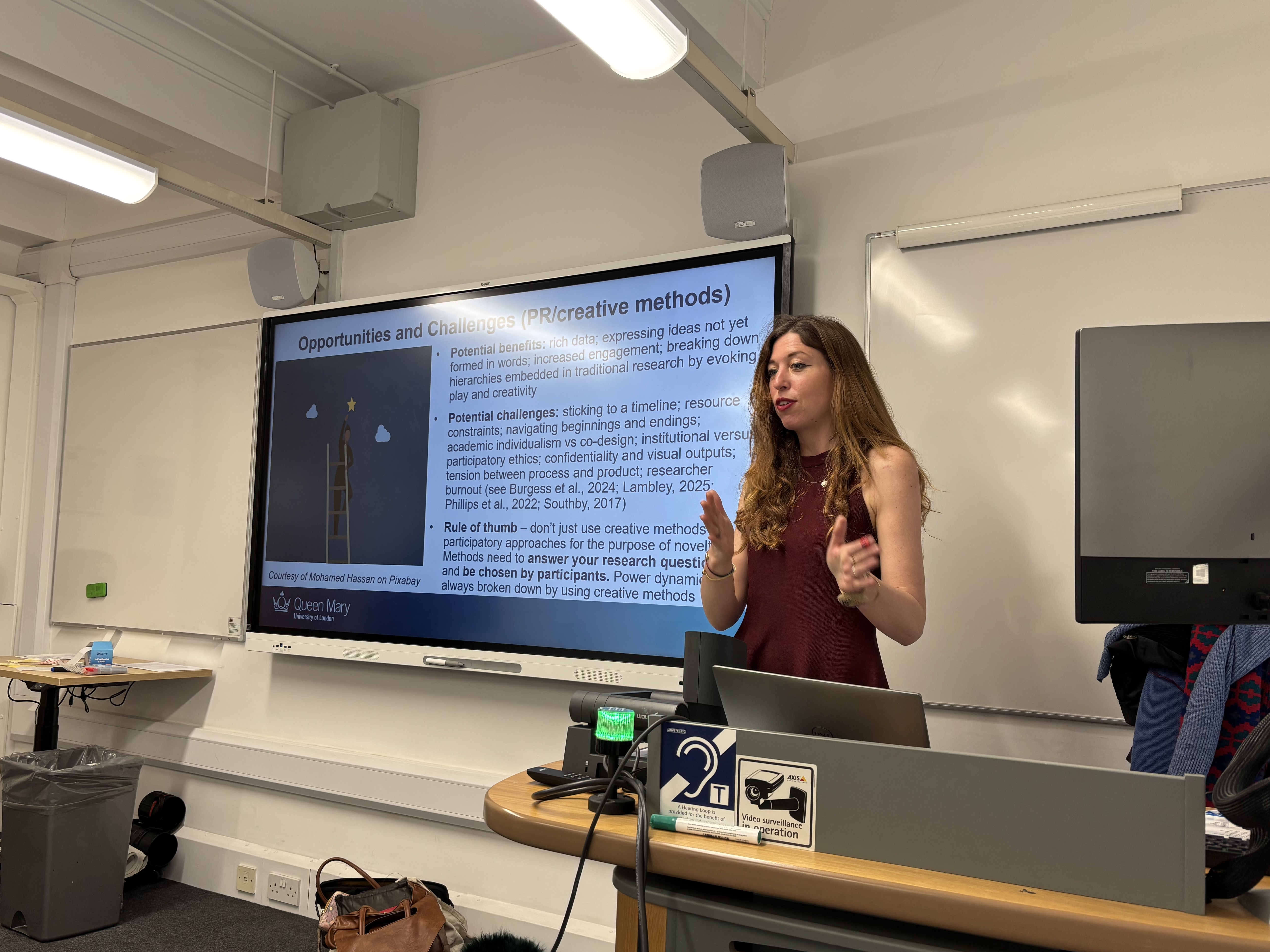
Potential benefits
- Generating rich and multi-layered data
- Allowing participants to express ideas that may not yet be formed in words
- Increasing engagement through play, creativity, and experimentation
- Helping to challenge hierarchies often embedded in traditional research methods
Potential challenges
- Time and resource constraints
- Managing the beginning and ending of participatory projects
- Navigating tensions between institutional and participatory ethics processes
- Handling confidentiality when visual or creative outputs are produced
- The emotional demands and potential for researcher burnout
Aoife emphasised an important rule of thumb: creative or participatory approaches should not be used simply for novelty. Methods need to be appropriate for the research question and chosen by participants.
What is Feasible in a PhD?
Aoife reflected on the realities of undertaking participatory and creative approaches within the limited time and resources of a doctoral project.
Participatory research
- Participatory research exists on a continuum, ranging from minimal involvement to participants acting as co-researchers.
- It is important to carefully consider the scope of participation within a PhD.
- Planning is essential – including contingency planning.
- Researchers should discuss data ownership and transparency with co-participants from the beginning.
- Building trust and relationships with communities takes time and should begin before the research.
Creative methods
- Offer co-participants choices about how they would like to contribute, focusing on creating with participants rather than collecting data from them.
- Build in time for trial and experimentation – play and exploration can be an important part of the process.
- Be clear about whether creative methods are being used for data collection or meaning-making.
- Consider accessibility and practical limitations, including whether collaboration with arts practitioners may be helpful.
Examples from Aoife’s Research
Aoife also shared examples from her own research using creative methods.
In her Master’s research on women’s body image, she used photo elicitation and self-portraiture alongside narrative interviews. These visual and narrative approaches complemented each other and were particularly well suited to exploring sensitive topics, allowing participants to reflect on changing perceptions of their bodies over time and generating rich, multi-layered data. However, Aoife also noted that the topic could be emotionally triggering for some participants, highlighting the importance of having appropriate support mechanisms and safeguards in place to minimise potential harm.
In her PhD research on female (a)sexualities, creative approaches again helped explore complex and often misunderstood experiences. While these methods generated multi-perspectival data and challenged assumptions around asexuality, Aoife reflected that managing large volumes of data and designing effective creative prompts were ongoing challenges. She also emphasised the emotional demands of researching personal and sensitive topics, and the importance of having support networks and wellbeing strategies in place.
Aoife also shared reflections from a later research project examining the role of sport, culture, and education in addressing poverty, gender inequality, and conflict in Nepal, Timor-Leste, and Cape Verde. In this project, creative approaches such as photovoice allowed young participants to document challenges in their communities and present their ideas at local seminars involving NGOs, coaches, and policymakers. These methods helped amplify young people’s voices and supported them to develop confidence and connections to pursue their own initiatives. At the same time, the project highlighted practical challenges often associated with participatory research, including sustaining projects once funding ends, the pressure placed on individual researchers undertaking intensive fieldwork, and the complexities of working across languages and cultural contexts.
Group Activity: Reflecting on Participatory Methods in PhDs
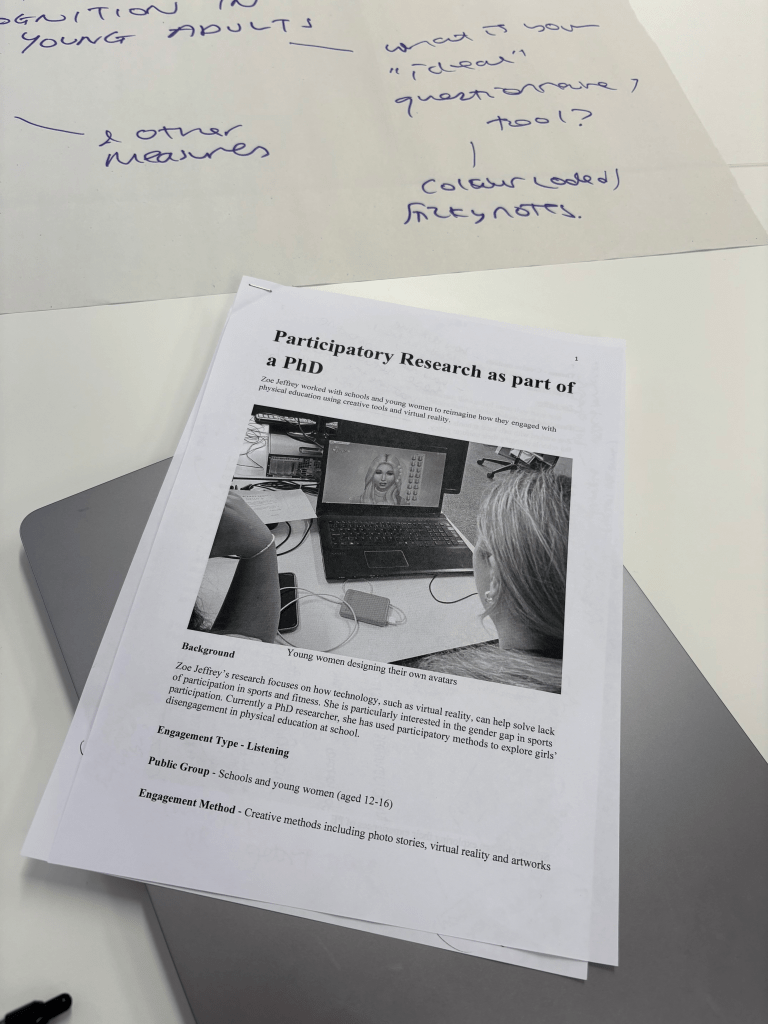
Members then worked in small groups to discuss a sample doctoral research case study that used participatory and creative methods.
Groups reflected on:
- The suitability of the methods used
- Potential strengths and limitations
- Challenges the researcher might encounter
- The practical realities of implementing participatory approaches within a PhD
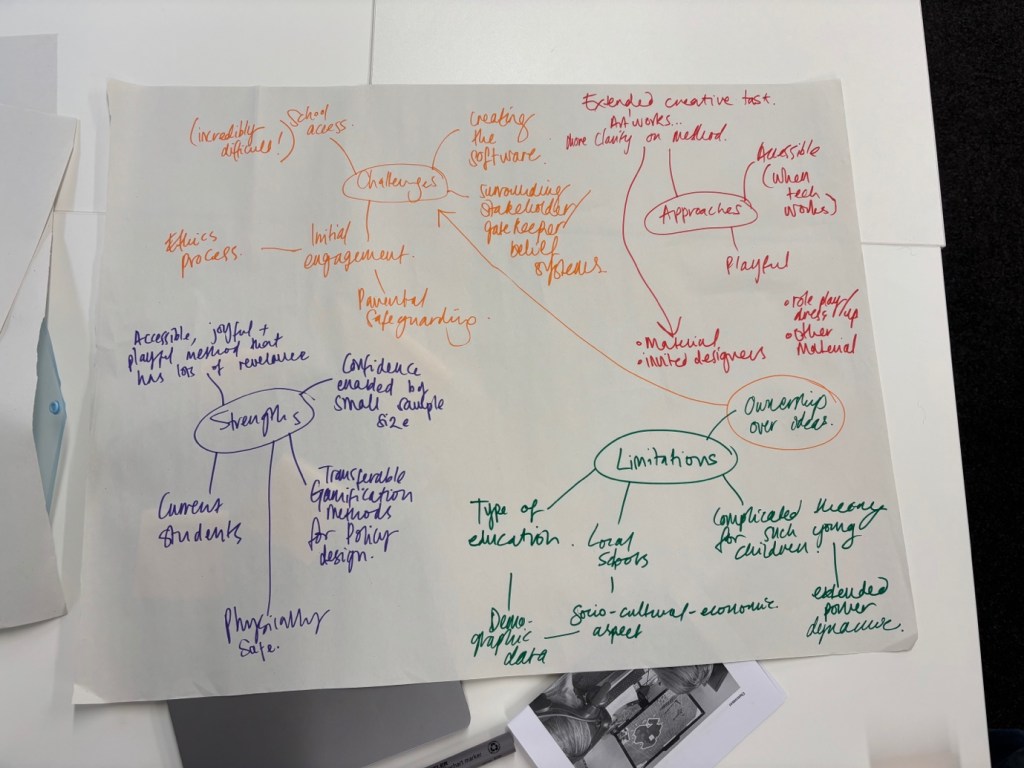
Group Activity: Representing Our Own PhD Projects
In a second activity, members reflected on their own relationships with participatory and creative methods.
Participants were invited to consider:
- What participatory research and creative methods mean within their projects
- What kind of research environment their project requires
- Whether their perspectives on using creative methods had changed during the session
Members were encouraged to represent their reflections in different ways, including words, drawings, or visual representations.
Emotional Labour and Ending Participatory Projects
An important theme that emerged during the session was the emotional labour of participatory research.
Members discussed:
- The emotional labour involved in participatory work
- The importance of support networks, including colleagues, institutional support, and personal wellbeing strategies
- How researchers can end participatory projects responsibly
Aoife emphasised the importance of being transparent about project timelines from the beginning, and ensuring that participants are not left feeling abruptly disconnected once a project ends. Some strategies discussed among network members included final meetings, reflective debriefs, and collectively marking the end of the collaboration.
Throughout the session, Aoife highlighted the importance of recognising the potential for burnout in participatory research and ensuring researchers have appropriate support systems in place.
Thank you again to Dr Aoife Sadlier for sharing such thoughtful reflections on creative methods in participatory research, and to all network members for contributing to the discussion!
Please see below for upcoming network events.
1. PhD Participatory Research Surgery: Q&A Session with Dr Anne-Laure Le Cuff on Wednesday 18th March, 1-2pm (online)
We are delighted to welcome Dr Anne-Laure Le Cunff, who will be hosting an online Q&A session for the PhD Participatory Research Network. The session will provide an opportunity to discuss ideas and questions about participatory research – please come along with your questions and join the conversation!
Sign up via Eventbrite here. The Microsoft Teams link will be sent 48 hours before the session.
2. PhD Participatory Research Network: April Session on Wednesday 1st April, 2-4pm (hybrid)
For this session, we are delighted to welcome Amreen Aslam (PhD Researcher within the collaboratory programme at the University of Nottingham) and Zoe Williamson (Head of Services the National Coordinating Centre for Public Engagement, NCCPE), who will lead a hybrid session on involving community partners or co‑researchers in analysing and interpreting data, with a particular emphasis on what is feasible to undertake within a PhD.
This is a hybrid session. Please register using the appropriate link: in-person attendance or online attendance. The Microsoft Teams link will be sent 48 hours before the session.
3. PhD Participatory Research Network Lunchtime Webinar with Katrina Messiha – Becoming Participatory in Public Health: Theoretical Foundations and Practice of Co-creation on Wednesday 15th April, 1-2pm (online)
We’re delighted to announce the first Lunchtime Webinar hosted by the PhD Participatory Research Network!
We are pleased to welcome Katrina Messiha, Marie Skłodowska-Curie PhD Fellow at Amsterdam University Medical Center, for her talk: Becoming Participatory in Public Health: Theoretical Foundations and Practice of Co-creation
This session will explore the conceptual foundations and practical realities of co-creation and participatory research in public health. Katrina will critically examine key challenges in the field, and introduce theoretical and methodological principles relevant to doctoral researchers working with participatory and co-creative approaches.
Sign up via Eventbrite here, where you can also find further details about the talk. The Microsoft Teams link will be sent 48 hours before the session.
 PhD Participatory Research Network
Leave a comment