As this was our first session of the new academic year, we started by making space for newer PhD students to ask what they needed, while those further along reflected on what would have helped them at the beginning.
What we talked about:
How to integrate theories and the practical elements of participatory research? One member shared how they had run something like a mini-lecture to explain the academic language, then opened it up for reflection: what resonates, and what feels relevant? This brought everyone in the room to the same starting point. We talked about the importance of giving up control, sharing power, and teaching and learning together.
How to co-design qualitative research? Two members reflected that their work had been closer to an advisory panel than fully participatory, as their groups preferred to amend a drafted interview or focus group schedule rather than start from a blank page. A purely ground-up approach isn’t always right for the group you’re working with, and it’s important to be transparent about what is feasible in a PhD, especially if the research questions are already set.
What do community members get from taking part in the research? We discussed flipping this question and asking people directly what they want to get from it. Payment is the ideal, but funding might not always allow this. Other options we discussed included:
Describing their involvement in a way they can use on a CV, or supporting the write-up of their participatory research experiences for a CV
A certificate of the skills they gained
Capacity-building, as some community members value gaining research skills
Framing co-produced research as a form of advocacy for their community, and explaining why it differs from mainstream research
Simply asking: for example, in one project, the young people wanted driving lessons because their transport was limited
Two mindset tips:
There is no such thing as “perfect participatory research”. Within the constraints of a PhD, trying to involve community members at every stage can easily turn into a checkbox exercise. It may be more meaningful to ask community members which stages matter most to them, and to focus on embedding participatory values as far as we can.
This work comes with a lot of emotions. Guilt about not doing it well enough, worry about making “mistakes”, and burnout are all common. Having a community of researchers to talk to openly about these, rather than brushing them under the carpet, is part of what this space is for.
We finished by reflecting on our journeys leading up to the PhD and what we would like to see from future network meetings.
Join our November session!
We meet online on the first Wednesday of each month, 2-3pm. Our next meeting is Wednesday 4th November, where Abbey Brunault, a PhD researcher at King’s College London, will share about their community-based co-design project, as well as their approach to research disseminating and collaborating with an artist!
Resources shared by members
On doing a participatory PhD
Anderson, A.J. and Sankofa, N. (2025) ‘Preparing for participatory action research: Professional development to support education doctoral students’ critical reflexivity’, Educational Action Research, 34(1), pp. 123–137. https://doi.org/10.1080/09650792.2025.2495684
Dedotsi, S. and Panić, G. (2020) ‘Resisting within the neoliberalising academy: Reflections on doing transformative doctoral research’, Emotion, Space and Society, 35. https://doi.org/10.1016/j.emospa.2020.100657
Felner, J.K. (2020) ‘”You Get a PhD and We Get a Few Hundred Bucks”: Mutual Benefits in Participatory Action Research?’, Health Education & Behavior, 47(4), pp. 549–555. https://doi.org/10.1177/1090198120902763
Klocker, N. (2012) ‘Doing Participatory Action Research and Doing a PhD: Words of Encouragement for Prospective Students’, Journal of Geography in Higher Education, 36(1), pp. 149–163. https://doi.org/10.1080/03098265.2011.589828
Lambley, R. (2024) ‘The challenges of navigating participatory research: The perspective of a doctoral student who co-ordinates a team of researchers with lived experience of mental health challenges’, Educational Action Research, 33(1), pp. 143–152. https://doi.org/10.1080/09650792.2024.2429444
Beyond Sticky Notes. One member’s favourite co-design methods book: it helped a lot with planning and shaping their project, and they wished they had read it earlier!
Ann-Murray Brown. Helpful content and tools on monitoring, evaluation and learning.
Dr Helen Kara’s work on creative methods, recommended by a member who attended one of her talks:
This academic year (26/27), we will be holding monthly online sessions on the first Wednesday of each month, 2-3pm UK time. These sessions are a space to discuss all things participatory research – whether that’s challenges (or successes!) you’re facing in your projects, feedback from fellow PhD students, or sharing useful resources or takeaways from recent talks or conferences. Do let us know if you’d like to present your research and receive feedback from the group (either on the day or in advance).
If you’d like to get involved, please fill out this form to be added to our mailing list and rolling teams link. To join our monthly meetings, simply just join via the rolling teams link, so no need to register in advance – just turn up!
We will also be organising occasional in-person meet-ups for those who’d like to connect in person – stay tuned for details!
Youth Co-Creation for Health: Bringing the WHO/UNICEF Toolkit into PhD Research
2pm-4pm, 1st July, 2026
In our latest session, PhD students and early-career researchers (ECRs) came together to explore Youth co-creation for health: a practical guide, which is the WHO/UNICEF/TDR toolkit created with young co-creators worldwide. This was a special session of the PhD Participatory Research Network, organised in collaboration with Social Engagement to Spur Health (SESH) and the London School of Hygiene and Tropical Medicine. The session included a presentation, a panel discussion, a group activity, and a Q&A, all focused on one main question: what does meaningful youth co-creation look like in the context of a PhD?
During this session, we welcomed PhD students and ECRs from King’s College London, Queen Mary University of London, Oxford Brookes, London School of Economics and the London School of Hygiene and Tropical Medicine.
Meet the speakers
The session was introduced by Yusha, alongside a panel of four guests – including the three researchers involved in the development of the toolkit, as well as a guest speaker from the PhD Participatory Research Network:
OluwakoredeAdedeji is a DPhil student in Clinical Medicine at the University of Oxford, studying HIV drug resistance mutations. Korede is credited as a co-leader of the toolkit who led the development of the toolkit from start to finish. The toolkit was built on Korede’s work at a youth-led workshop at the 2024 International AIDS Conference, which led to a global effort under the WHO to define what meaningful youth co-creation should look like.
Martins O. Iyekekpolor works across health systems evaluation and participatory research, now a research fellow at the London School of Hygiene and Tropical Medicine, University of London. He has worked on multiple co-creation projects centred on health, including UNICEF’s Human-Centred Design (HCD) research, the development of an HCD workbook for public health professionals in Nigeria, and support for HCD initiatives in other countries.
YoshikoSakuma is a trained physiotherapist with experience in both the UK and Japan, now a Research Fellow and PhD student at LSHTM’s International Centre for Evidence in Disability. Her work focuses on participatory and community-driven approaches to sexual and reproductive health among people with disabilities. She is currently leading a project on facilitators and barriers to cervical cancer screening among women with disabilities in Japan and the UK.
Emma Hayashibara is a PhD Candidate at Queen Mary University of London and is also the founder and co-organiser of the PhD Participatory Research Network. Emma’s work focuses on co-creating a new mental health assessment tool with and for neurodivergent young adults.
ID: Screenshot of a virtual panel discussion on a Microsoft Teams call, titled “Panel Discussion: A conversation on applying youth co-creation in early-career research.” The lower half displays headshots of the speakers – Korede, Emma, Yoshi, and Martins.
What is co-creation?
Korede opened with a presentation introducing the toolkit. He made a key point: over half of the world’s population is aged 30 or younger, and yet they are rarely invited to help shape the policies, programmes, and research that most affect them. Co-creation is meant to close that gap: it’s a participatory method in which young people work alongside researchers, practitioners, and others to shape every stage of a project, from the earliest ideas through to dissemination, with a deliberate plan to identify and address power imbalances along the way.
Martins explained that just running a workshop with young people does not mean true co-creation. The toolkit makes a clear distinction between real collaboration and okenism. The key difference is whether young people help guide the project or are only responding to decisions made by the researcher.
A phrase that came up often was “start where they are”, the idea that facilitators need to properly assess where young people are at and stay flexible in their methods, rather than importing a rigid process and expecting young people to fit in. We also stressed that this is not just about carving out space for young people to speak. It’s about creating an atmosphere where everyone in the room, regardless of age or professional background, is willing to be a learner, and where lived experience is treated as its own expertise, rather than an accessory to “real” research.
On the practical side of making this normal in institutions, these ideas came up repeatedly:
Actually creating the space and welcoming young people into it, rather than assuming they’ll find their own way in.
Building a genuine support network around them, not leaving individual young people to navigate institutional processes alone.
Making room for mistakes, since co-creation is inherently a process of trial, correction, and improvement rather than something you get right the first time.
The “show and do” principle: rather than just describing an idea, get people physically doing something with it, so the concept becomes tangible instead of abstract.
ID: Screenshot of a virtual PowerPoint presentation slide on a Microsoft Teams call, titled “Developing the practical guide”, with bullet point facts about the Youth co-creation for health toolkit under it. The bullet points are: Developed by youth from LMICs, Attention to power imbalances, Evidence-based from an open call and review, Developed through a collaborative process.
One thing to do before you start co-creating
Each panellist was asked for one practical thing they’d do before beginning a co-creation project. The answers ended up capturing quite different angles on the same underlying idea:
Korede: Listen first.
Emma: let go of control and expectations, and take a step back to see what actually happens rather than steering too tightly.
Yoshiko: get young people involved as early as possible in the study, not once the design is already locked in.
Martins: build in safe ways to disagree. Disagreement needs to be possible without it turning into conflict, and that requires a particular mindset from everyone in the room, not just the young people.
What’s feasible at PhD level?
The discussion then turned to how to apply these principles when you’re an early-career researcher with limited time, funding, and expertise.
Yoshiko observed that PhD students and ECRs occupy an “in-between” position: they are close enough in age and experience to bridge the gap between institutions and participants, but have limited authority to change institutional structures or research conventions. ECRs oftentimes transition between roles, sometimes as peers and at other times as facilitators, researchers, or institutional representatives. Deliberately adopting the appropriate role as needed is essential for effective co-creation. The primary barriers identified were lack of support and training, as well as limited time and funding.
This discussion informed the breakout room activity, during which groups addressed three key questions. Our group reached the following conclusions:
Where could young people be more actively involved in shaping research or academic work?
In qualitative research, young people’s involvement is often restricted to data provision, with limited participation in analysis (such as theme development in thematic analysis). Involving them in the analysis enables identification of the most relevant data from their perspective, rather than solely the researcher’s.
Data collection, particularly through peer-led or co-facilitated approaches where appropriate
Evaluation of the research process itself, reflecting on what worked and what could be improved
Proposal development and grant writing so young people are identifying priorities before projects begin.
Involving young people in recruitment strategies and the development of participant materials enhances the accessibility and engagement of studies for their peers.
Engaging young people in study design ensures that research questions and methodologies reflect their perspectives.
What is one practical action PhD students or ECRs could take to make youth involvement more respectful, reciprocal, and useful?
Think reciprocally: what would the young person actually want out of this experience, and think outside the box about it.
Examples include providing professional certificates detailing research skills and workshop participation, explicitly recognising them as co-researchers, supporting their academic networking, and offering to serve as referees for their CVs
Alternatively, ask directly, “What would you like to gain from this project?” and provide concrete options to guide their response.
Schedule regular check-ins so young people can see how their contributions are influencing the project.
Maintain transparency regarding the practical constraints of a PhD or early-career project and clarify which decisions can be shared.
Create opportunities for ongoing feedback, allowing youth involvement to adapt as the project progresses.
What support, resources, or learning points would help ECRs practise youth co-creation more effectively?
A support network, both official and unofficial, of people navigating the same challenges
Institution-specific directories outlining funding opportunities, key contacts, and case studies from within the institution.
Strong supervisor support and encouragement for participatory approaches
Advocate for clearer ethical guidance tailored to participatory and co-produced research.
Seek practical guidance on fairly recognising and compensating young co-researchers
Facilitate connections between ECRs and peer support networks that extend beyond individual institutions.
Advocate for increased flexibility in project timelines to accommodate the iterative processes inherent in participatory research.
Martins recommended initiating co-creation early by conducting a brief priority-setting session with young people before finalizing the research design, ensuring the research reflects their needs. He also advocated for moving beyond consultation to provide experiential opportunities, such as leading a grant, writing a study, or conducting an interview. Additionally, he emphasized that co-creation should be included as a dedicated budget line item at the proposal stage.
ID: Screenshot of a finished output slide completed after the group activity. The slide is split into the three questions mentioned above, with the answer boxes filled in by one of the groups.
Lessons learned and reflections
By the end of the session, a few ideas stood out:
Youth should drive the priorities, not just respond to ones set for them.
Even within the constraints of a PhD, with limited funding and time, there are practical ways to incorporate more youth involvement.
Even with the structural limitations faced by PhD students, there is often more institutional support available than initially perceived. Leveraging institutional resources (such as developing a co-creation directory, forming groups, and establishing connections) can provide a realistic foundation for a support system for ECRs.
The session ended with closing remarks from Joseph D Tucker, who reflected on how meaningful it was to have a collaborative space like this for ECRs to connect and share experiences.
Q&A highlights
Regarding constructive disagreement with young people: Martins suggested implementing safe, low-stakes mechanisms such as anonymous voting on sensitive topics. When a participant’s view diverges from the group’s direction, the manner of response is crucial. Framing feedback as “I hear what you’re saying, and I think we could also add this” maintains a collaborative rather than corrective environment.
On balancing anonymity with recognition: it was noted that young people contribute substantively to research and should be acknowledged for their professional skill development, such as through certification. However, this creates a tension between maintaining confidentiality and providing credit. The consensus was to offer young people the choice to claim or display their involvement, rather than making this decision on their behalf.
On what to prioritise in a toolkit for PhD students specifically: Korede’s advice was to push for more specificity in practical steps, such as establishing direct reporting lines and providing concrete guidance on engaging with supervisors, mentors, and the broader institution, rather than leaving these relationships to develop informally.
Written by Zahra Yusuf, Queen Mary University of London
Franklin Wilkins Building, King’s College London and MS Teams
Our May session of the PhD Participatory Research Network was our second hybrid session, bringing together both returning and new members. During this session, we welcomed PhD students from King’s College London, Queen Mary University of London, Goldsmiths University of London, Oxford Brookes, Durham University, University of East London, Nottingham Trent, Birbeck, Brunel and University of Lincoln, Birmingham, Glasgow, Greenwich and Calgary.
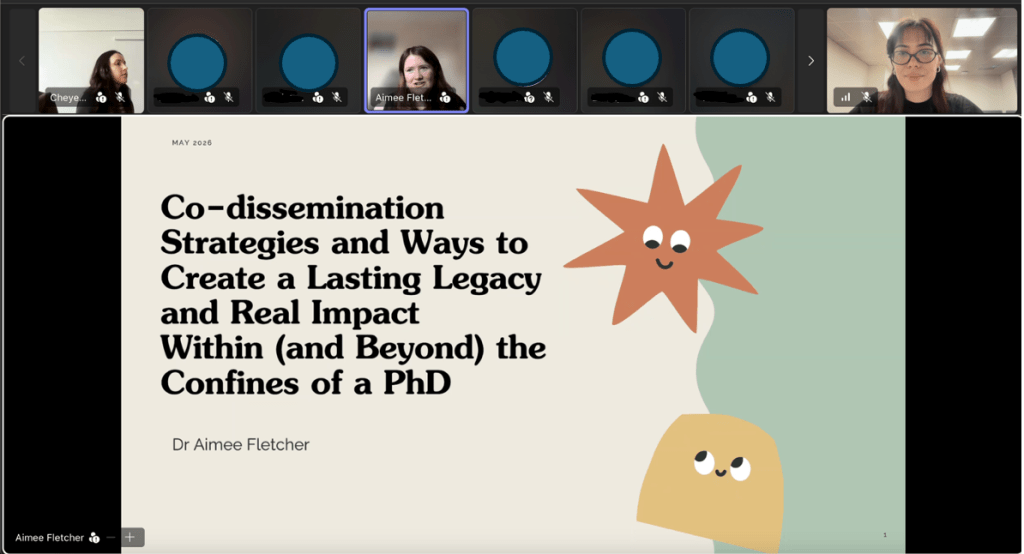
ID: Screenshot of Aimee’s title slide: Co-dissemination Strategies and Ways to Create a Lasting Legacy and Real Impact Within (and Beyond) the Confines of a PhD, Dr Aimee Fletcher. The tiles at the top highlight the presenter, Aimee, as well as the facilitators. The slide design features a cream and light green background with illustrated shapes with smiling faces.
Co-Dissemination and Impact
This session was led by Dr Aimee Fletcher, a recent PhD graduate and Participation Coordinator at Scottish Autism. Aimee held an interactive session on co-dissemination and impact, reflecting on the strategies she utilised during her PhD, the plans she initially developed, and how these approaches worked in practice. She also shared insights into how co-dissemination skills can be developed and applied beyond academia.
What is co-dissemination?
Aimee opened with a definition of co-dissemination, which at its core is about collaboration.
Co-dissemination involves working alongside communities, stakeholders and individuals outside academia throughout the entire research process. Aimee highlighted several important aspects of co-dissemination, explaining that it should:
Involve the community your research aims to serve
Make research more accessible by allowing it to go beyond academic spaces.
May influence policymaking
Co-dissemination at the PhD level
Aimee acknowledged that thinking about the impact of your research can be a daunting process that most PhD students experience. She linked this directly to imposter syndrome, as we often feel we are not the right person for the project and that our research could not reach the heights of others’. Reflecting on her own experience, Aimee emphasised that co-dissemination does not need to be scary; these processes are naturally messy and is it ok to take a step back when thinking about impact.
Two key questions when thinking about co-dissemination and impact:
Who is this research for?
How can I meaningfully engage and include them?
Rather than aiming for perfection, Aimee encouraged the group to focus on transparency and adaptability. Most importantly, she highlighted that your PhD is a time for learning, which will prepare you for your future career and projects where you will utilise your skills and adapt from lessons learned.
A key message: Impostor syndrome is extremely common in research; you are not alone, and you deserve to be where you are. Avoid comparisons and conduct participatory research in a way that best supports your target community, works for your research, and is within your means.
No one is an expert, and this is the beauty of participatory research: it is about the power of sharing knowledge together.
Aimee’s PhD experience: Neurodivergence in Museums: Making the Cultural Heritage Sector Accessible using Participatory Practices
Aimee’s PhD ran from October 2020 to September 2024. Her project was informed by both informal and formal collaboration approaches and her own lived experience. Over 1,000 people contributed to her research through various approaches, including social media discussions, neurodivergent communities and interactions during conferences.
As an autistic researcher, Aimee brought her own lived experience into her work, while remaining cautious not to become “one voice speaking for all”. She therefore aimed for a transferable and transparent approach, where she was open about her position and listened to others.
Aimee’s participatory approach was guided by a simple mantra:
Listen – Reflect – Adapt
Throughout her PhD, she consistently adapted her research in response to feedback from those involved, implementing a reflexive and proactive response to community needs, particularly regarding data collection. Aimee also stressed the importance of the principle: “nothing about us, without us”, which she used as a constant reminder that research requires diverse representation for a better understanding of the needs and wants of the community.
Aimee’s participatory plans: Balancing Ambition with Reality
Like many researchers beginning participatory research, Aimee started with what she now calls ambitious plans. Initially envisioning focus groups, advisory panels, collaborative data analysis, and “walk and talk” sessions, the reality of conducting participatory research during COVID-19, alongside the restrictions of a PhD, such as time and funding constraints, and the challenges of being a one-person team (with support from PhD supervisors), meant that some plans were not feasible. One particular challenge faced was the ethics of including participants in analytical stages, as it was unrealistic to ask community members to review such large volumes of data and meaningful co-analyses data as initially hoped.
So, what did Aimee do?
Aimee held two workshops to help shape research questions, methods and resources.
To enhance accountability & transparency: created “what to expect” booklets and produced summary tables highlighting what was discussed and what emerged from the discussions.
She received feedback on surveys and adapted them accordingly before distribution.
Informal methods: Her findings and research progress were constantly shared on Twitter, asking for feedback. She also shared conferences and wrote blogs.
Workshops to explore themes of findings and provide options for a 1:1 meeting.
Research was made accessible via posters, recorded presentations and dissemination in community spaces.
Lessons learned and reflections:
Looking back on her PhD, Aimee shared several key lessons:
Be ambitious, but realistic about what can be achieved within your timescale and PhD budget.
Take time to understand the community and what matters to them.
Build trust through openness and transparency: Acknowledge power dynamics and accept you may not always have the answers.
Share the research process consistently, not just the findings
What you learn from the process is what’s important – not about getting everything “perfect”
Although Aimee is not currently in a formal research role, her passion remains in research, and she now utilises her skills as a participation coordinator. One example she shared of applying the principles of participatory research in her current role was establishing an Autistic Advisory panel and ensuring accessibility needs were fully met.
ID: Q&A slide featuring a cream and light green background decorated with illustrated shapes with smiling faces and speech bubbles.
Q&A Highlights
How did you approach co-dissemination? My supervisor said it’s not a good idea due to publication concerns.
Aimee explained that much of her dissemination was informal, particularly through social media. She suggested that writing blogs or sharing general overviews of research can be a useful way to engage audiences without disclosing unpublished findings.
Q: Do you have any advice on tackling imposter syndrome, particularly for someone without lived experience?
A: Aimee noted that the principles of collaboration apply whether researchers have lived experience. She encouraged attendees to take a step back and ask what the community needs. All should remain cautious about positioning themselves as speaking “for” entire groups rather than on behalf of/alongside.
Q: How do you ensure you maintain consistent community involvement on a small budget?
A: Aimee notes that we should be striving to pay/financially recognise people for their time and sharing their lived expertise, but acknowledged that payment may not always been available or the preference of the individual. She reinforced the importance of working with individuals to recognise how they would like their contributions to be recognised; it might be access to training or specific resources, a certificate recognising their contribution, cards. Ideally, it is specific to an individual’s preference.
Q: With informal dissemination, how do you bridge the gap between policy & community (prevent funders and individuals from taking up the voice)?
A: Aimee reflected that much of this work comes down to ongoing advocacy and maintaining accountability to the communities involved.
Q: Regarding your use of social media – did you already have that platform to approach, or is this something you created during your PhD? How do you build on this to a point where you have high interaction?
A: Although she already had some presence on platforms like Twitter and LinkedIn, her audience grew organically as she shared both her research journey and aspects of her life beyond academia. Showing authenticity and humanity helped foster meaningful engagement.
Group discussions & the interactive activity: The co-dissemination help sheet
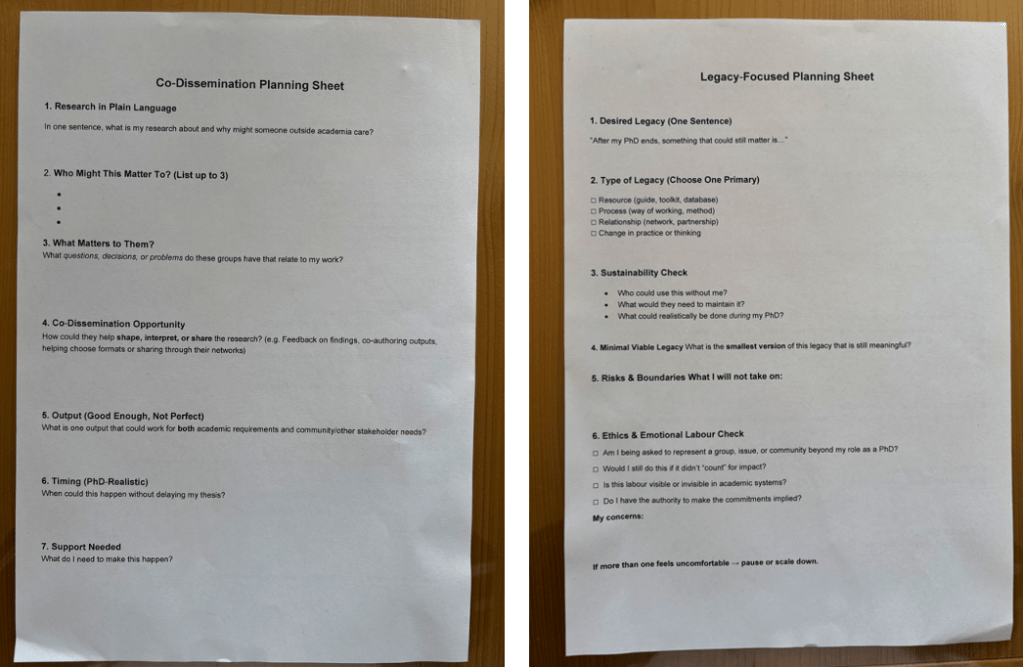
Aimee’s session ended with an interactive activity that allowed group members to reflect on their own research, answer key questions, consider co-dissemination methods, and determine what impact they’d like their research to have. The sheet consisted of two main sections 1. Co-Dissemination Planning Sheet 2. Legacy-Focused Planning sheet, with the following questions:
Co-Dissemination Planning Sheet:
Research in Plain Language: In one sentence, what is my research about and why might someone outside academia care?
Who Might This Matter To?
What Matters to Them? What questions, decisions, or problems do these groups have that relate to my work?
Co-Dissemination Opportunity: How could they help shape, interpret, or share the research? (e.g., feedback on findings, co-authoring outputs, helping choose formats or sharing through their networks)
Output (Good Enough, Not Perfect): What is one output that could work for both academic requirements and community/other stakeholder needs?
Timing (PhD-Realistic): When could this happen without delaying my thesis?
Support Needed: What do I need to make this happen?
Legacy-Focused Planning Sheet
Desired Legacy: “After my PhD ends, something that could still matter is…”
Type of Legacy (Choose One Primary)
Resource (guide, toolkit, database)
Process (way of working, method)
Relationship (network, partnership)
Change in practice or thinking
Sustainability Check
Who could use this without me?
What would they need to maintain it?
What could realistically be done during my PhD?
Minimal Viable Legacy: What is the smallest version of this legacy that is still meaningful?
Risks & Boundaries: What I will not take on:
Ethics & Emotional Labour Check
Am I being asked to represent a group, issue, or community beyond my role as a PhD?
Would I still do this if it didn’t “count” for impact?
Is this labour visible or invisible in academic systems?
Do I have the authority to make the commitments implied?
For the legacy planning sheet, Aimee expressed that “if more than one feels uncomfortable, pause or scale down”.
Aimee noted that the planning sheet may work for some projects or communities more than others, but it is a way of starting the thought process. Members expressed that this activity was extremely beneficial, asking questions they had not considered, which will help them better decide and incorporate dissemination methods.
ID: Photos of the Co-Dissemination and Legacy-Focused Planning Sheet print-outs.
Toolkit discussion
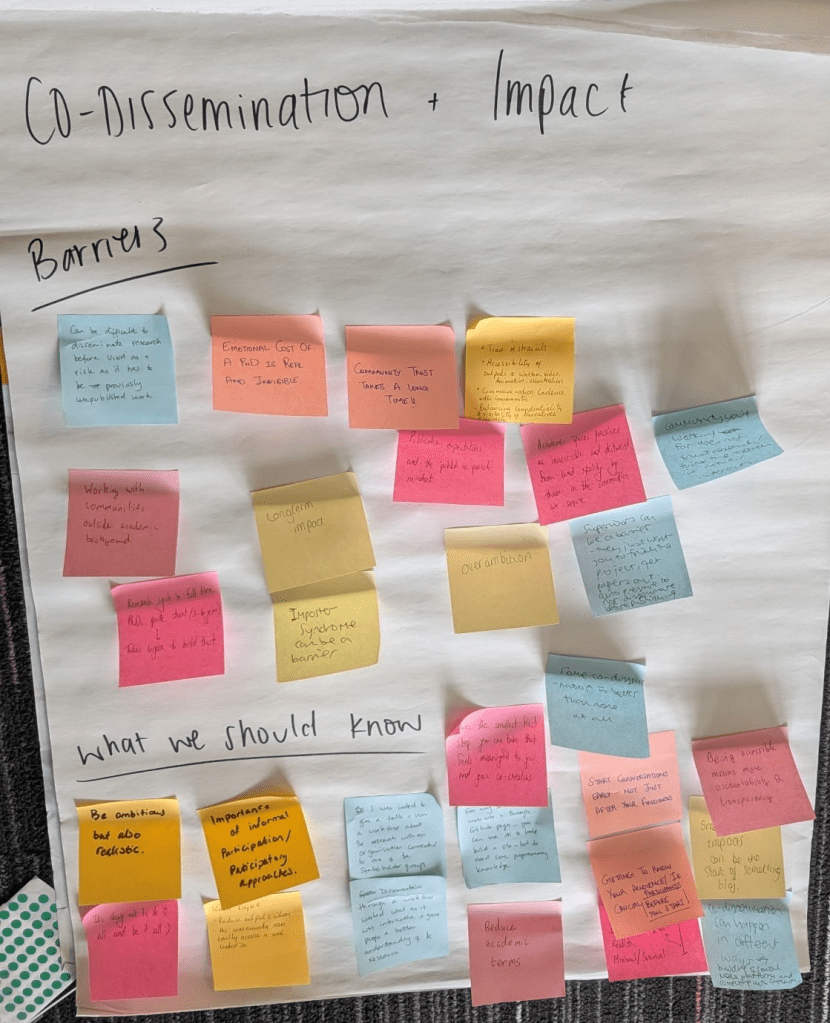
ID: Toolkit discussion points presented on a large sheet of white flipchart paper using multicolored sticky notes, focusing on challenges of co-dissemination at the PhD level and tips for other students planning co-dissemination (see below for summary).
The session closed with group discussions on our toolkit development and key points to highlight regarding co-dissemination. Members identified the following barriers and priorities:
Barriers at the PhD level:
Building community trust takes time.
Challenges to co-analysis and dissemination due to accessibility
It can be difficult to disseminate research before viva.
The emotional cost of a PhD is real and invisible.
Academic spaces can be perceived as inaccessible and distorted from the lived experiences of community members.
Overambition
Imposter syndrome can make you doubt your abilities.
What students should know:
Be ambitious but realistic.
Consider the importance of informal participation/participatory approaches, e.g., use of social media.
It’s okay to not do it all and be it all.
Dissemination through workshops can work well, as they are interactive and help people better understand research.
Reduce academic terms when engaging with community members.
Do what you can within your means: Some co-dissemination is better than none.
Start the process and conversations early, not just after findings.
Get to know your audience before you start.
A small impact can be the start of something big.
Co-dissemination can happen in different ways.
Being accessible means being more accountable and transparent.
Thank you again to Aimee for such a thoughtful session, and to all network members for contributing so openly!
Lunchtime Webinar by Katrina Messiha Becoming Participatory in Public Health: Theoretical Foundations and Practice of Co-creation
The PhD Participatory Research Network recently welcomed Katrina Messiha, a Social Scientist and a PhD Fellow (Amsterdam University Medical Center) for a lunchtime webinar on co-creation and participatory research in public health. The session was shaped by themes suggested by our network and brought together PhD researchers from the UK, Europe, Australia, South Africa, and beyond.
Katrina’s talk drew on her doctoral research, Theory-based Principles for Co-creation in Public Health, and positioned co-creation not simply as a popular participatory approach, but as a methodological and theoretical challenge in public health research. She argued that while co-creation is now widely used, it remains explicitly theoretically under-specified and is often applied inconsistently. Rather than treating it as a fixed method or universal solution, Katrina framed co-creation as a complex, relational and iterative process that needs to be aligned with the realities of public health complexity.
Katrina started by talking through some of the key terms we often hear in this space (e.g., participation, involvement, engagement, and co-creation) and why they do not mean the same thing. One of the clearest points was that these approaches can entail very different levels or extents of power-sharing, even if they’re sometimes used interchangeably. She also made a helpful distinction between qualitative research and co-creation, pointing out that co-creation may be less about gathering people’s views and more about sharing decision-making.
Katrina also drew an important distinction between qualitative research and co-creation. While qualitative research may entail gathering people’s views, co-creation goes further by engaging stakeholders in shaping decisions, defining priorities and contributing to knowledge production. This helped clarify why participation, involvement and engagement should not automatically be treated as equivalent. Co-creation, in this framing, is not only about listening to people, but about reconsidering who has influence over the research process itself.
A big theme throughout was the need to be careful and specific in how we use participatory approaches. Katrina spoke about some of the common issues in the field, like tokenism, fragmented practice. Rather than assuming co-creation is always the “right” approach, she encouraged us to think more critically about when it actually makes sense to use it. She also noted that the increased interest in co-creation has led to inconsistent and superficial applications, and emphasised that co-creation should not be viewed as a “universal solution”. Moreover, as researchers, we may assume more stakeholder engagement is always better, but Katrina encouraged us to think more carefully about what level of stakeholder engagement actually fits the project, the context, and the related stakeholders’ interests, motivations and capacities.
A particularly useful part of the talk was Katrina’s discussion of when co-creation is actually appropriate. She explained that co-creation may not be needed where a solution already exists and works well, or where a problem can be addressed independently. However, where problems are complex, context-dependent or poorly understood, co-creation can help bring together different forms of knowledge and support the development of more workable, meaningful and context-sensitive solutions. This was a helpful reminder that co-creation requires methodological judgement, rather than automatic application.
Katrina unpacked tokenism not only as a problem of superficial engagement, but as something that can have real consequences for participants and co-creators. She noted that when people are invited into research without genuine influence, this can lead to disappointment, mistrust and what has been described as the “dark side” of co-creation. This point was especially valuable because it moved the discussion beyond simply advocating for more participation and towards asking whether participation is meaningful, honest and appropriately designed.
Another big theme throughout Katrina’s talk was the importance of considering theory. One of the main messages was that participatory research often doesn’t make its theoretical foundations very visible. The main key takeaway message was: if we’re using theory, we should say so clearly, explain why, and show how it’s shaping what we do, and don’t just leave it in the background.
Katrina’s emphasis on theory was one of the strongest parts of the webinar. Drawing on her systematic review of contemporary theories used in co-creation, co-design and co-production in public health, she explained that from nearly 5,000 screened papers, only 10 explicitly used theoretical underpinnings. She used this finding to show that the lack of theory in co-creation is not just a conceptual issue, but an empirical gap in the evidence base. Theory, she argued, matters because it can guide intervention design, inform methods such as interview guides and evaluations and make research more transparent, reproducible and cumulative.
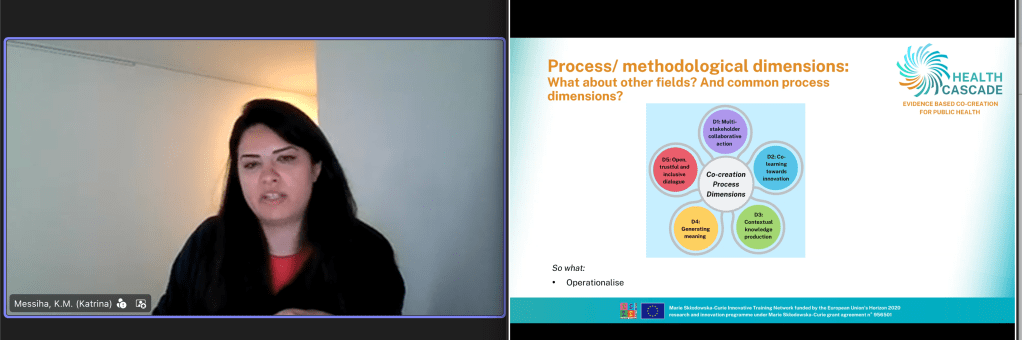
Katrina also showed how co-creation research can benefit from looking beyond public health. Drawing on her cross-disciplinary work, she discussed common process dimensions of co-creation, including multi-stakeholder collaborative action, co-learning towards innovation, contextual knowledge production, generating meaning and open, trustful and inclusive dialogue. These dimensions were presented as practical ways of thinking through how co-creation actually happens, how it is experienced and how it can be communicated more clearly in research.
ID: Screenshot of Katrina presenting a slide titled “Process/methodological dimensions: What about other fields? And common process dimensions?”. The graphic depicts the Co-creation Process Dimensions Framework. It outlines five core, cross-disciplinary dimensions identified through a systematic review of how co-creation is operationalised: D1: Multi-stakeholder collaborative action; D2: Co-learning towards innovation; D3: Contextual knowledge production; D4: Generating meaning; D5: Open, trustful and inclusive dialogue.
Another distinctive contribution of the webinar was the discussion of critical realism as a promising methodological lens for public health co-creation. Katrina explained that critical realism can help researchers look beyond what is immediately visible and consider the underlying mechanisms shaping public health outcomes. Rather than understanding causality in a simple or linear way, this approach asks how social, political, institutional and relational factors interact in particular contexts. This offered a valuable way of thinking about how co-creation can support deeper causal understanding, rather than remaining at the level of surface-level participation.
She also addressed the realities of how messy co-creation can be in practice. It doesn’t tend to follow neat steps, and instead relies a lot on relationships, trust, and flexibility, especially when working with marginalised communities. She shared examples from her University of Cambridge work on dementia and healthcare access, showing how participatory approaches can surface barriers that might otherwise be missed using traditional methods.
In the dementia case study, Katrina showed how co-creation can reveal barriers that may remain less visible through more traditional research methods. These included fragmented health and welfare systems, delayed diagnosis, rigid eligibility criteria, inaccessible information, stigma, distrust, fear of being judged or surveilled and suspicion towards institutions and researchers. The case study demonstrated that trust is not something researchers can assume; it has to be actively built through authenticity, transparency, continuity and flexible forms of engagement.
Katrina’s discussion of Youth Participatory Action Research further illustrated the practical tensions involved in participatory work. She emphasised that equitable engagement cannot be assumed simply because a project uses participatory language. Instead, researchers need to actively manage power dynamics, create safe and welcoming environments and consider whether young people are being treated as data sources or as genuine decision-makers. This was a useful reminder that participatory approaches require ongoing reflexivity, not only good intentions.
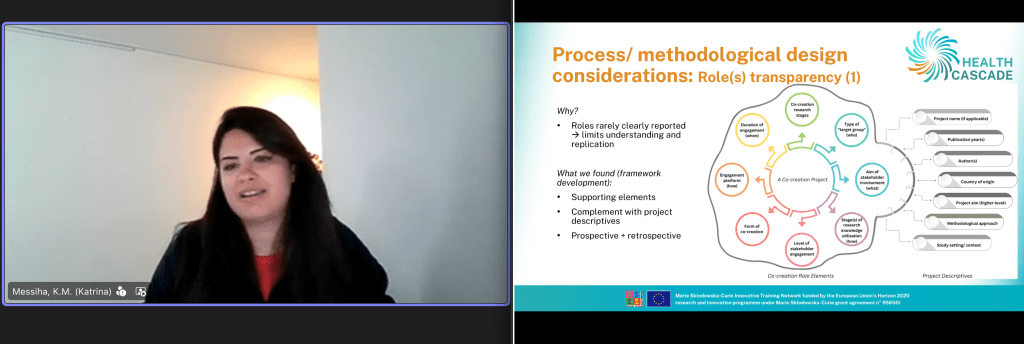
Katrina also introduced the importance of role transparency in co-creation research. She explained that clearly reporting stakeholder roles is not only about giving credit, but also about understanding how knowledge was produced, how decisions were made and how participatory processes can be planned, evaluated or replicated. Her framework was presented in its utility for both prospective application, for negotiating roles and responsibilities with co-creators, and retrospectively, for analysing and reporting what happened during a project.
ID: Screenshot of Katrina presenting a slide titled “Process/ methodological design considerations: Role(s) transparency. Slide content “Why? Roles rarely clearly reported -> limits understanding and replication. What we found (framework development): Supporting elements; Complement with project descriptives; Prospective + retrospective. The slide also shows a conceptual framework graphic illustrating the cyclical relationships between various stakeholder roles and external project dimensions in co-production research. The framework includes a cloud-like shape containing a multi-colored circular ring of arrows pointing clockwise around the central text “Co-creation landscape”; this central cycle is ringed by eight distinct circular nodes representing: Co-creation research states; Type of “target group”; Aim of stakeholder involvement; Stage(s) of research knowledge utilisation; Level of stakeholder engagement; Form of co-creation; Engagement platform; Duration of engagement.
In the Q&A, we spoke about “insider researchers” (i.e., people researching topics they also have lived experience of) and how they fit within participatory approaches. Katrina described this as an open question, depending on the different “hats” a researcher holds, and suggested that greater representation can be a strength, but isn’t the same thing as co-creation on its own.
Overall, the webinar encouraged us to move from a general enthusiasm for participation towards a more careful and rigorous understanding of co-creation. Katrina’s central message was that co-creation should be defined clearly, theoretically grounded, designed with attention to context and power and reported transparently. For PhD researchers, this offered a valuable framework for thinking not only about how to engage stakeholders, but also about why, when and under what conditions participatory research can produce meaningful knowledge. Thank you so much, Katrina for a fantastic talk!
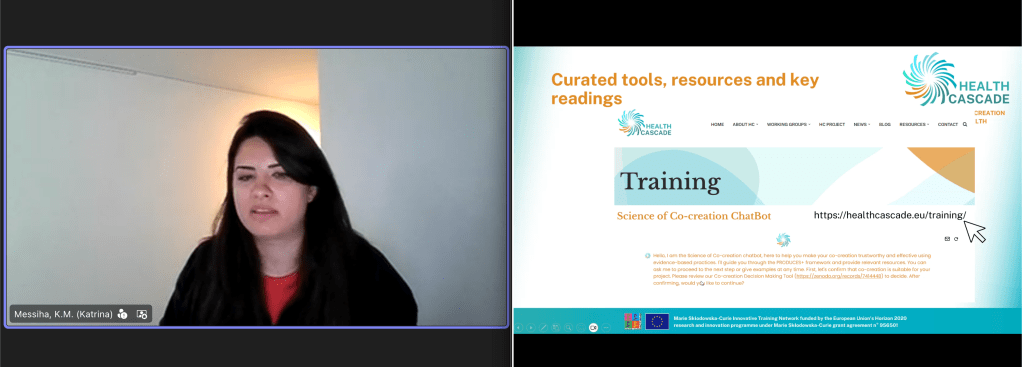
ID: Screenshot of Katrina presenting a slide titled “Curated tools, resources and key readings”. The slide shows a link to the Science of Co-creation ChatBot (https://healthcascade.eu/training/).
Curated tools, resources, and key readings kindly shared by Katrina:
Health CASCADE (Marie Skłodowska Curie Innovative Training Networks project funded by the European Union) blog: https://healthcascade.eu/blog/
Most recent peer-reviewed publications by Katrina:
Messiha, K., Chinapaw, M.J., Ket, H.C., An, Q., Anand-Kumar, V., Longworth, G.R., Chastin, S. and Altenburg, T.M., 2023. Systematic review of contemporary theories used for co-creation, co-design and co-production in public health. Journal of Public Health, 45(3), pp.723-737.
Messiha, K., Altenburg, T.M., Schreier, M., Longworth, G.R., Thomas, N., Chastin, S. and Chinapaw, M.J., 2024. Enriching the evidence base of co-creation research in public health with methodological principles of critical realism. Critical Public Health, 34(1), pp.1-19.
Messiha, K. and Stokes, G., 2024. A Qualitative Study on the Contemporary Perspectives and Experiences of Co-residence During COVID-19 Among “Boomeranging” Young Adults and Their Mothers in England. SAGE Open, 14(4), p.21582440241307473.
Messiha, K., Altenburg, T.M., Giné-Garriga, M., Chastin, S. and Chinapaw, M.J., 2025. Enriching the Existing Knowledge About Co-creation: Identifying Dimensions of Co-creationUsing Explicit Theory in Various Research Fields. Minerva, pp.1-24.
Messiha, K.*,Thomas, N.*, Brayne, C., Agnello, D.M., Delfmann, L., Giné-Garriga, M., Lippke, S. and Downey, J., 2025. Grey literature scoping review: a synthesis of the application of participatory methodologies in underrepresented groups at an elevated risk of dementia. BMC Medical Research Methodology, 25(1), p.122.
Messiha, K., Chinapaw, M.J., Chrifou, R., Deforche, B., Pehlivan, T., Strating, G., Verloigne, M. and Altenburg, T.M., 2026. Key considerations in applying youth participatory action research: elicited insights from international academics and practitioners-a health CASCADE study. International Journal of Adolescence and Youth, 31(1), p.2645826.
Agnello DM*, Loisel QEA*, An Q, Balaskas G, Chrifou R, Dall P, de Boer J, Delfmann LR, Giné-Garriga M, Goh K, Longworth GR, Messiha K, McCaffrey L, Smith N, Steiner A, Vogelsang M, Chastin S., 2023. Establishing a health CASCADE–curated open-access database to consolidate knowledge about co-creation: novel artificial intelligence–assisted methodology based on systematic reviews. Journal of medical Internet research, 25, p.e45059. *co-first authors.
An, Q., Sandlund, M., Lundell, S., Kuenen, C., Chastin, S., Helleday, R., Messiha, K., Loisel, Q. and Wadell, K., 2025. Transition design: Co-creating system solutions for chronic obstructive pulmonary disease (COPD) care. Design Studies, 98, p.101297.
Anand-Kumar, V., Schreier, M., Bakshi, N., Messiha, K., Longworth, G.R., An, Q., Angello, D.M., Chastin, S. and Lippke, S., 2025. Facilitators and challenges of co-creating digital public health interventions: A Health CASCADE multi-case exploratory study. Public Health, 247, p.105847.
Chastin, S.F.M., Smith, N., Agnello, D.M., An, Q., Altenburg, T.M., Balaskas, G., de Boer, J., Cardon, G., Chinapaw, M.J.M.,Chrifou, R., Dall, P.M., Davis, A., Deforche, B., Delfmann, L.R., Giné-Garriga, M., Goh, K., Hunter, S.C., Leask, C.F., Lippke, S., Loisel, Q.E.A., Longworth, G.R., McCaffrey, L., Messiha, K., Morejon, S., Pappa, D., Papadopoulos, H., Ryde, G.C., Sandlund, M., Schreier, M., Steiner, A., Verloigne, M., Vogelsang, M., Wadell, K., (2025). Principles and attributes of evidence-based co-creation: From naïve praxis toward a trustworthy methodology-A Health CASCADE study. Public Health, 248,p.105922.
Chrifou, R., Focquaert, F., Messiha, K., Ghaly, M., Altenburg, T., Deforche, B. and Verloigne, M., 2025. The meaning of ethical collaborative research according to young people. International Journal of Adolescence and Youth, 30(1), p.2517099.
Delfmann, L.R., de Boer, J., Schreier, M., Messiha, K., Deforche, B., Hunter, S.C., Cardon, G., Vandendriessche, A. and Verloigne, M., 2025. Experiences with a co-creation process to adapt a healthy sleep intervention with adolescents: A Health CASCADE process evaluation. Public Health, 241, pp.69-74.
Longworth, G.R., Goh, K., Agnello, D.M., Messiha, K., Beeckman, M., Zapata-Restrepo, J.R., Cardon, G., Chastin, S. and Giné-Garriga, M., 2024. A review of implementation and evaluation frameworks for public health interventions to inform co-creation: a Health CASCADE study. Health Research Policy and Systems, 22(1), p.39.
McCaffrey, L., McCann, B., Giné-Garriga, M., An, Q., Cardon, G., Chastin, S.F.M., Chrifou, R., Lippke, S., Loisel, Q., Longworth, G.R., Messiha, K., Vogelsang, M., Whyte, E., Dall, M.P., 2024. Adult co-creators’ emotional and psychological experiences of the co-creationprocess: a Health CASCADE scoping review protocol. Systematic Reviews, 13(1), p.231.
McCaffrey, L., McCann, B., Giné-Garriga, M., An, Q., Cardon, G., Chastin, S.F.M., Chrifou, R., Lippke, S., Loisel, Q., Longworth, G.R. and Messiha, K., Vogelsang, M., Whyte, E., Dall, M.P., 2025. Co-creationexperiences among adults in diverse contexts: A Health CASCADE scoping review. Public Health, 238, pp.29-36.
Franklin Wilkins Building, King’s College London and MS Teams
Our April session of the PhD Participatory Research Network brought together PhD students from King’s College London, Queen Mary University of London, Imperial College London, Durham University, University of Birmingham, University of Greenwich, Brunel University of London, Royal Holloway University of London, University of the West of England, Edinburgh Napier University alongside guests from the National Coordinating Centre for Public Engagement (NCCPE).
Co-Analysis in Participatory Research: Setting the Scene
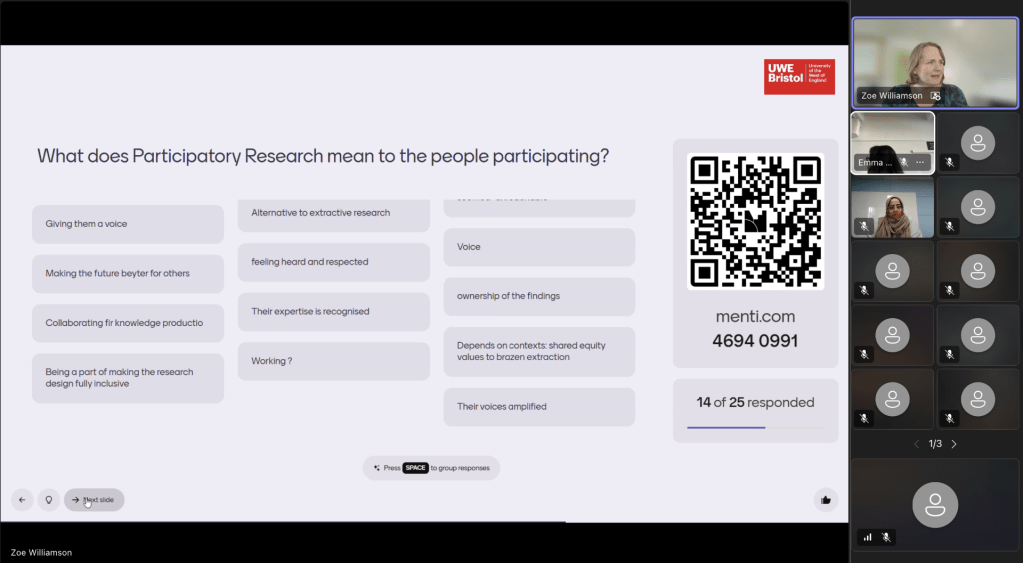
Zoe opened with a Mentimeter activity to explore what participatory research means to the group, what it means to participants, and when co-analysis should begin. The discussion outlined: participatory research looks different for everyone, and it is important to reflect on what it means within your own project before co-analysis.
Key takeaways:
Participatory research is not one-size-fits-all and approaches vary across projects and communities.
Starting co-analysis from the very beginning is ideal but may not always be practical within a PhD.
Being open and honest with participants about commitment, feasibility, and what each party hopes to give and receive is essential.
ID: Screenshot of the Teams call, showing the Mentimeter findings: “What does Participatory Research mean to the people participating?” Some responses include: Giving them a voice, Making the future better for others, Collaborating for knowledge production, Being a part of making the research design fully inclusive, Alternative to extractive research, Feeling heard and respected, Their expertise is recognised, Working?, Voices, Ownership of the findings, Depends on the contexts: shared equity values to brazen extraction, Their voices amplified.
Planning Your Approach
Zoe introduced a reflective framework for thinking about what researchers can control, what they can influence, and what they have concerns over but cannot control. Network members contributed their own reflections:
What you can control: the number of meetings with your advisory group.
What you can influence: the type of training offered to your advisory group, or interactions with partner organisations.
What you have concern over but limited control: funding constraints, participants’ confidence and willingness to contribute, integrating co-analysis into quantitative approaches, and the tension between PhD timelines and ethical processes.
Zoe also signposted participants to two practical examples of co-analysis:
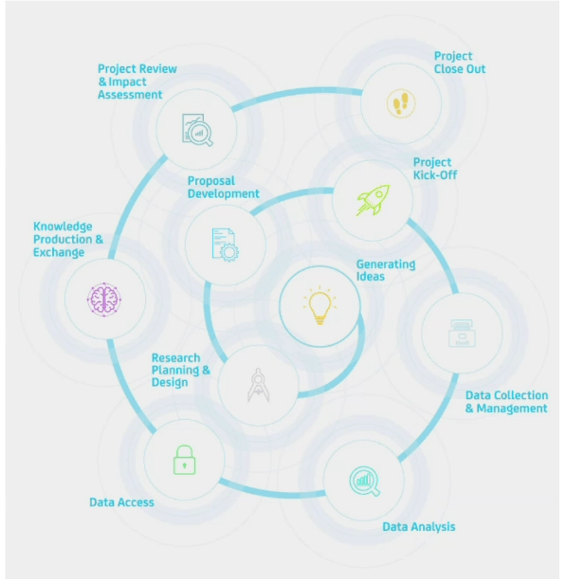
ID: Research Cycle: Generating Ideas, Research Planning & Design, Proposal Development, Project kick-off, Data collection & management, Data analysis, Data access, Knowledge production & exchange, Project review & impact assessment, Project close out.
Whose Voice Shapes Knowledge? Co-Analysing Trust with Pakistani Women in Nottingham
Amreen Aslam, PhD Researcher within the Collaboratory Programme at the University of Nottingham, shared her experience of evolving her research into a co-analysis approach.
Amreen’s research explores patterns of engagement, cultural context, and trust among Pakistani women. She began with individual interviews grounded in lived experience, using thematic analysis in NVivo for initial theme development. As patterns emerged, she recognised there was missing depth prompting her to introduce focus groups for deeper exploration of different layers of trust. Crucially, this shift was shaped in dialogue with her community supervisors, who helped her identify gaps. Amreen highlighted the value of bringing interpretation back to the community.
Amreen experienced an interruption to her studies while awaiting ethics approval but was able to complete her interviews within three months. Recruitment was smooth due to existing connections with her target population through her work. She underlined the importance of adapting to participants’ needs such as accommodating childcare, holidays, and other commitments.
Reflections from Amreen’s experiences:
The importance of navigating power dynamics between community participants, supervisors, and the researcher.
Positionality, including disagreements and what it means to represent someone else’s experiences.
The role of community supervisors in anchoring co-analysis and providing direction.
Co-analysis strengthened validity and generated richer focus group questions.
Group Reflections: What Co-Analysis Could Look Like in Our PhDs
Network members shared how they might approach co-analysis within their own projects. A rich range of perspectives emerged:
Several members are considering working with community advisory groups or panels, sharing quantitative findings to check their lived experience, checking for researcher assumptions, and asking participants how they would like findings to be shared.
Others are planning thematic co-analysis: working with an advisory panel to discuss codes, cluster them, and interpret themes, both during initial coding and again at the end to validate findings.
Others raised the complexity of co-analysis within a PhD that still expects the researcher to be the primary knowledge creator and called for clearer guidance on how to explain processes such as thematic analysis to advisory panels in accessible ways.
A member researching prison healthcare raised important questions around whether participatory approaches might unintentionally contribute to stigmatisation in sensitive institutional contexts and sought guidance on acknowledging contributions from those involved.
Several members noted that funding is a barrier, with one highlighting that having a small amount to pay lived experience experts had been invaluable and advocating for such support to be built into research proposals from the outset.
Towards a PhD Participatory Research Toolkit on Co-Analysis
The session closed with a collaborative discussion about what should be included in an upcoming PhD Participatory Research Toolkit. Members identified the following priorities for the co-analysis section:
Checking researcher bias and positionality: being mindful of neurodiversity, insider research, and assumptions brought to analysis — especially when working within communities you are part of.
Power sharing: proactively thinking through what types of power are present and where they lie, and using frameworks such as the Powercube and NCCPE’s Principles of Partnership Working to surface and address power dynamics.
Building relationships: using relational approaches, getting to know people before making assumptions, and finding common purpose through tools such as MUPI Purposeful Partnership Cards.
Training and soft skills: the need for accessible training on analytic approaches, alongside soft skills that are not always formally taught — active listening, facilitating discussions, managing language barriers.
Technical and administrative support: including recording, transcribing, co-authorship considerations, and the role of placement students or research assistants in supporting co-analysis.
Representation and consistency: acknowledging the challenge of diverse and consistent representation within PhD time and funding constraints, and being honest about when the same voices risk being over-represented.
Thank you to Zoe Williamson and Amreen Aslam for such a thoughtful and generative session, and to all network members for contributing so openly to the discussion!
Next Session
Please see below for upcoming network events.
PhD Participatory Research Network: May Session on Wednesday 6th May, 2-4pm (hybrid)
For this session, we are delighted to welcome three facilitators from The McPin Foundation: Femi, Hanna, and George. Together, they will lead a workshop focused on co-dissemination strategies and ways to create a lasting legacy and real impact within the confines of a doctorate.
This is a hybrid session. Please register using the appropriate link: in-person attendance or online attendance. The Microsoft Teams link will be sent 48 hours before the session.
Our March session of the PhD Participatory Research Network brought together PhD students from King’s College London, Queen Mary University of London, Imperial College London, and the University of York.
Creative Methods in Participatory Research
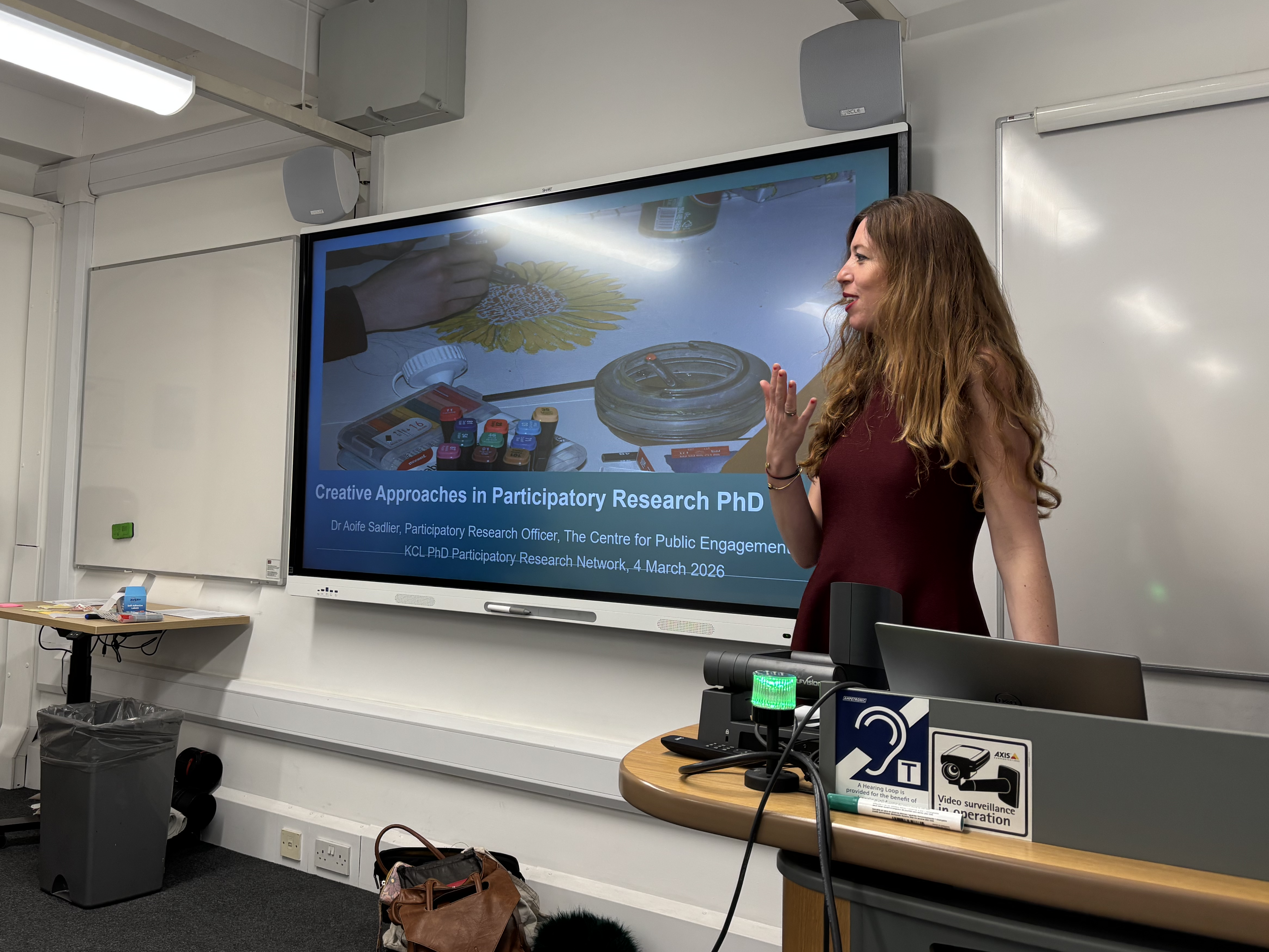
This session was hosted by Dr Aoife Sadlier, Participatory Research Officer at Queen Mary University of London.
ID: Aoife presenting her title slide “Creative Approaches in Participatory Research PhD”
Aoife began by introducing how creative and participatory methods can be particularly valuable when exploring sensitive topics or working with marginalised communities. She emphasised that while creative methods can open up new forms of expression and engagement, they also come with practical and ethical considerations.
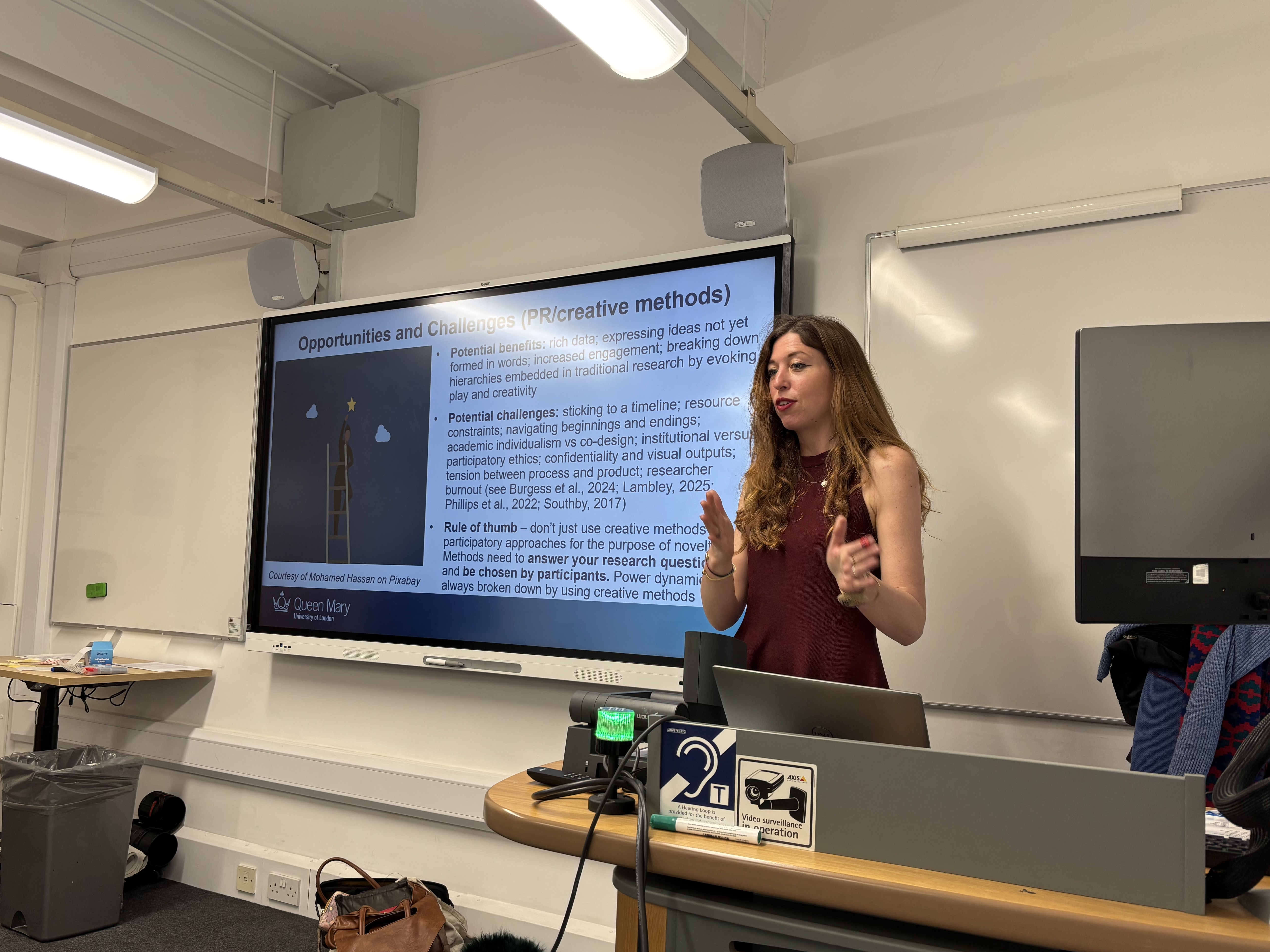
Potential benefits
Generating rich and multi-layered data
Allowing participants to express ideas that may not yet be formed in words
Increasing engagement through play, creativity, and experimentation
Helping to challenge hierarchies often embedded in traditional research methods
Potential challenges
Time and resource constraints
Managing the beginning and ending of participatory projects
Navigating tensions between institutional and participatory ethics processes
Handling confidentiality when visual or creative outputs are produced
The emotional demands and potential for researcher burnout
Aoife emphasised an important rule of thumb: creative or participatory approaches should not be used simply for novelty. Methods need to be appropriate for the research question and chosen by participants.
What is Feasible in a PhD?
Aoife reflected on the realities of undertaking participatory and creative approaches within the limited time and resources of a doctoral project.
Participatory research
Participatory research exists on a continuum, ranging from minimal involvement to participants acting as co-researchers.
It is important to carefully consider the scope of participation within a PhD.
Planning is essential – including contingency planning.
Researchers should discuss data ownership and transparency with co-participants from the beginning.
Building trust and relationships with communities takes time and should begin before the research.
Creative methods
ID: Aoife presenting a slide on Opportunities and Challenges
Offer co-participants choices about how they would like to contribute, focusing on creating with participants rather than collecting data from them.
Build in time for trial and experimentation – play and exploration can be an important part of the process.
Be clear about whether creative methods are being used for data collection or meaning-making.
Consider accessibility and practical limitations, including whether collaboration with arts practitioners may be helpful.
Examples from Aoife’s Research
Aoife also shared examples from her own research using creative methods.
In her Master’s research on women’s body image, she used photo elicitation and self-portraiture alongside narrative interviews. These visual and narrative approaches complemented each other and were particularly well suited to exploring sensitive topics, allowing participants to reflect on changing perceptions of their bodies over time and generating rich, multi-layered data. However, Aoife also noted that the topic could be emotionally triggering for some participants, highlighting the importance of having appropriate support mechanisms and safeguards in place to minimise potential harm.
In her PhD research on female (a)sexualities, creative approaches again helped explore complex and often misunderstood experiences. While these methods generated multi-perspectival data and challenged assumptions around asexuality, Aoife reflected that managing large volumes of data and designing effective creative prompts were ongoing challenges. She also emphasised the emotional demands of researching personal and sensitive topics, and the importance of having support networks and wellbeing strategies in place.
Aoife also shared reflections from a later research project examining the role of sport, culture, and education in addressing poverty, gender inequality, and conflict in Nepal, Timor-Leste, and Cape Verde. In this project, creative approaches such as photovoice allowed young participants to document challenges in their communities and present their ideas at local seminars involving NGOs, coaches, and policymakers. These methods helped amplify young people’s voices and supported them to develop confidence and connections to pursue their own initiatives. At the same time, the project highlighted practical challenges often associated with participatory research, including sustaining projects once funding ends, the pressure placed on individual researchers undertaking intensive fieldwork, and the complexities of working across languages and cultural contexts.
Group Activity: Reflecting on Participatory Methods in PhDs
Members then worked in small groups to discuss a sample doctoral research case study that used participatory and creative methods.
Groups reflected on:
The suitability of the methods used
Potential strengths and limitations
Challenges the researcher might encounter
The practical realities of implementing participatory approaches within a PhD
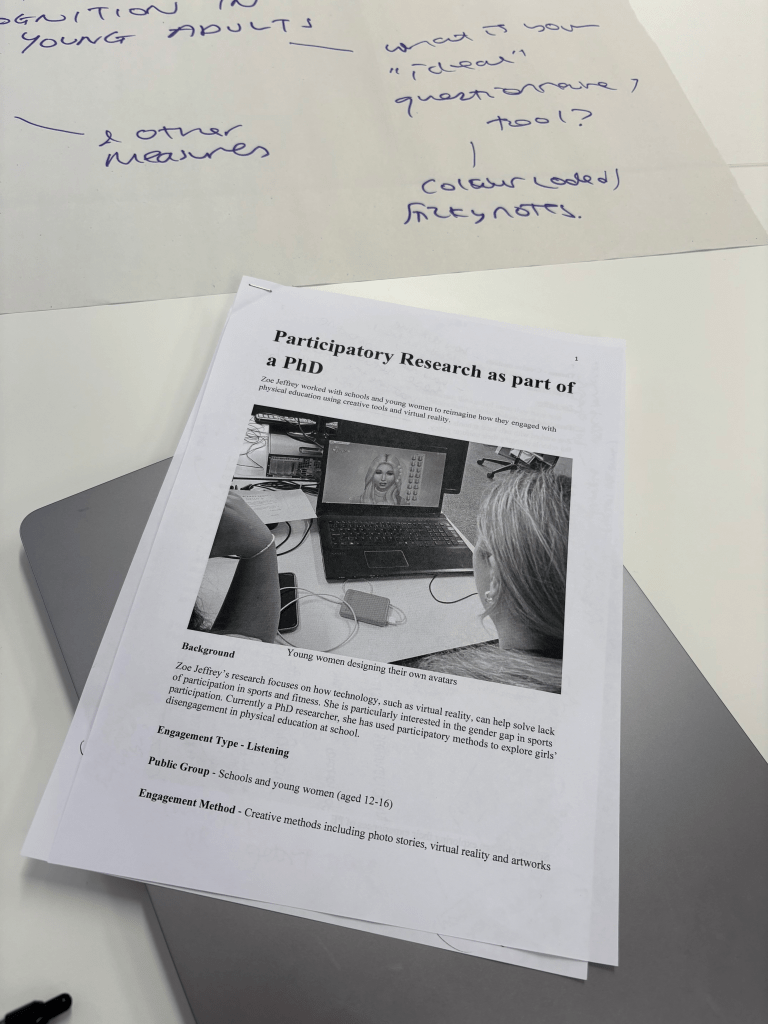
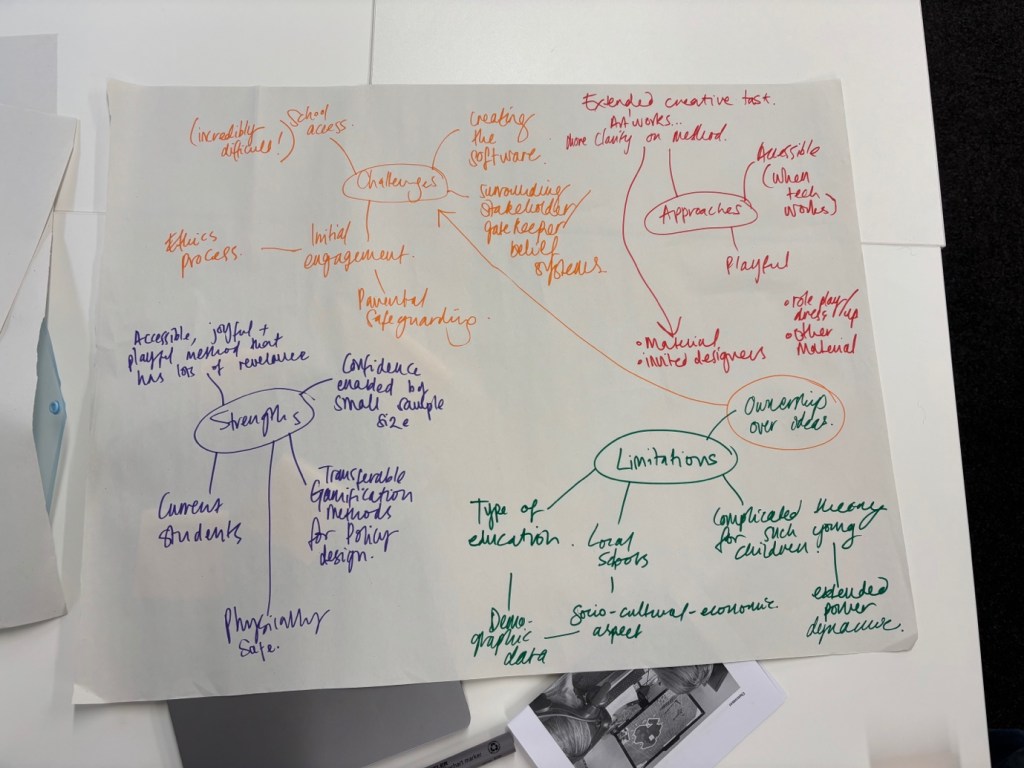
ID: Handout of ‘participatory research as part of a PhD’. The handout has a picture of young women designing their own avatars on a laptop.ID: Flipchart paper with a mind map of strengths, limitations, challenges, and approaches.
Group Activity: Representing Our Own PhD Projects
In a second activity, members reflected on their own relationships with participatory and creative methods.
Participants were invited to consider:
What participatory research and creative methods mean within their projects
What kind of research environment their project requires
Whether their perspectives on using creative methods had changed during the session
Members were encouraged to represent their reflections in different ways, including words, drawings, or visual representations.
Emotional Labour and Ending Participatory Projects
An important theme that emerged during the session was the emotional labour of participatory research.
Members discussed:
The emotional labour involved in participatory work
The importance of support networks, including colleagues, institutional support, and personal wellbeing strategies
How researchers can end participatory projects responsibly
Aoife emphasised the importance of being transparent about project timelines from the beginning, and ensuring that participants are not left feeling abruptly disconnected once a project ends. Some strategies discussed among network members included final meetings, reflective debriefs, and collectively marking the end of the collaboration.
Throughout the session, Aoife highlighted the importance of recognising the potential for burnout in participatory research and ensuring researchers have appropriate support systems in place.
Thank you again to Dr Aoife Sadlier for sharing such thoughtful reflections on creative methods in participatory research, and to all network members for contributing to the discussion!
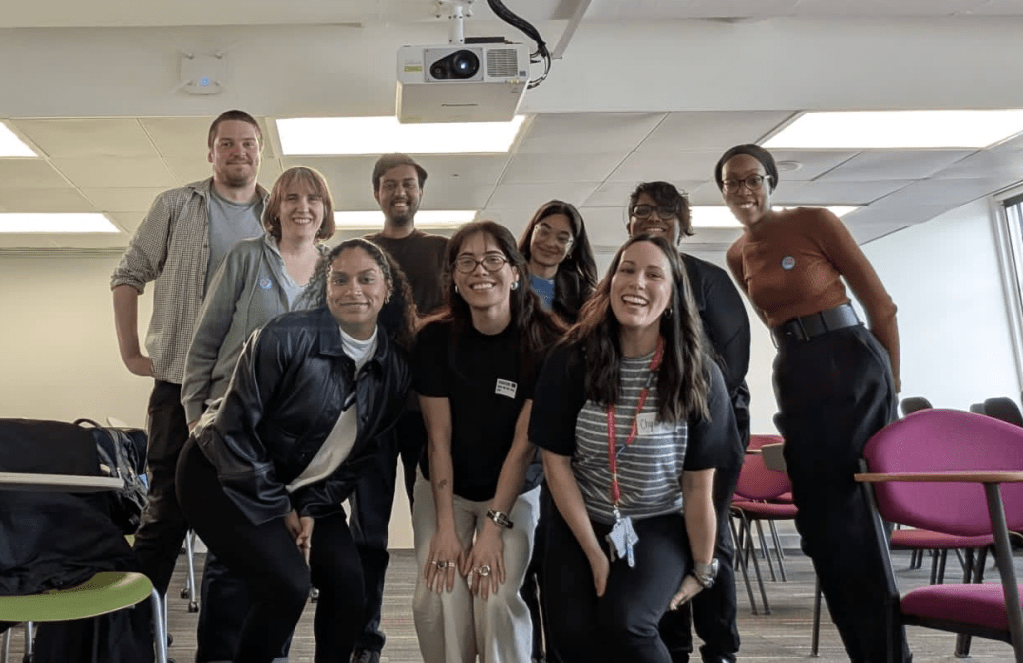
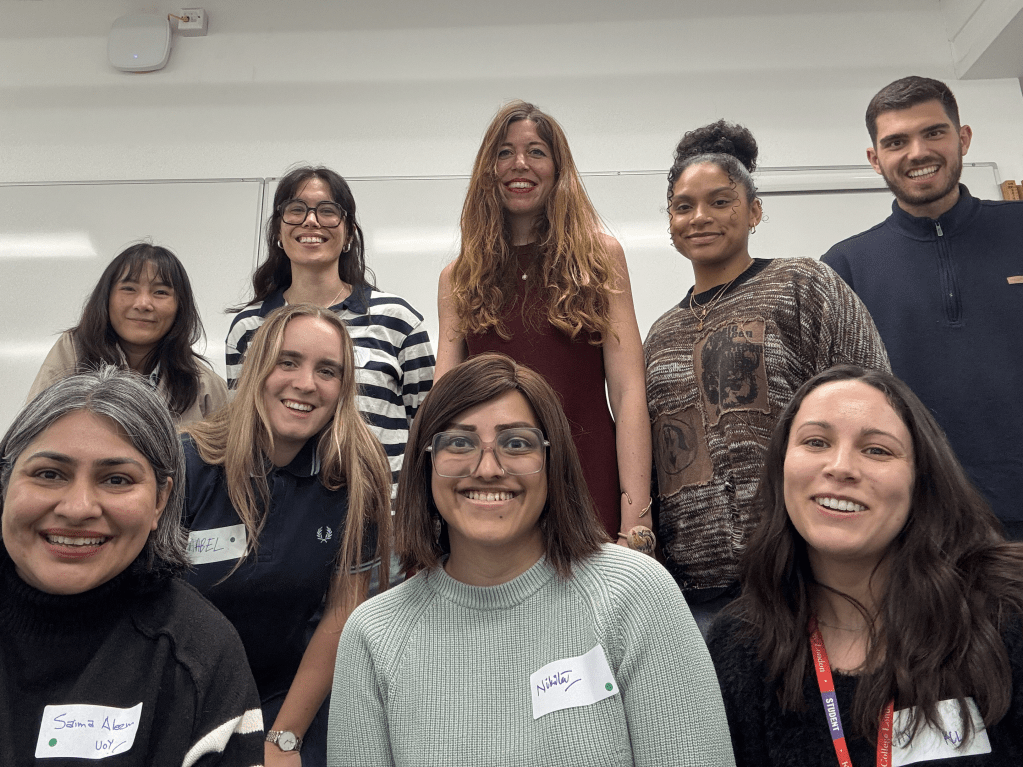
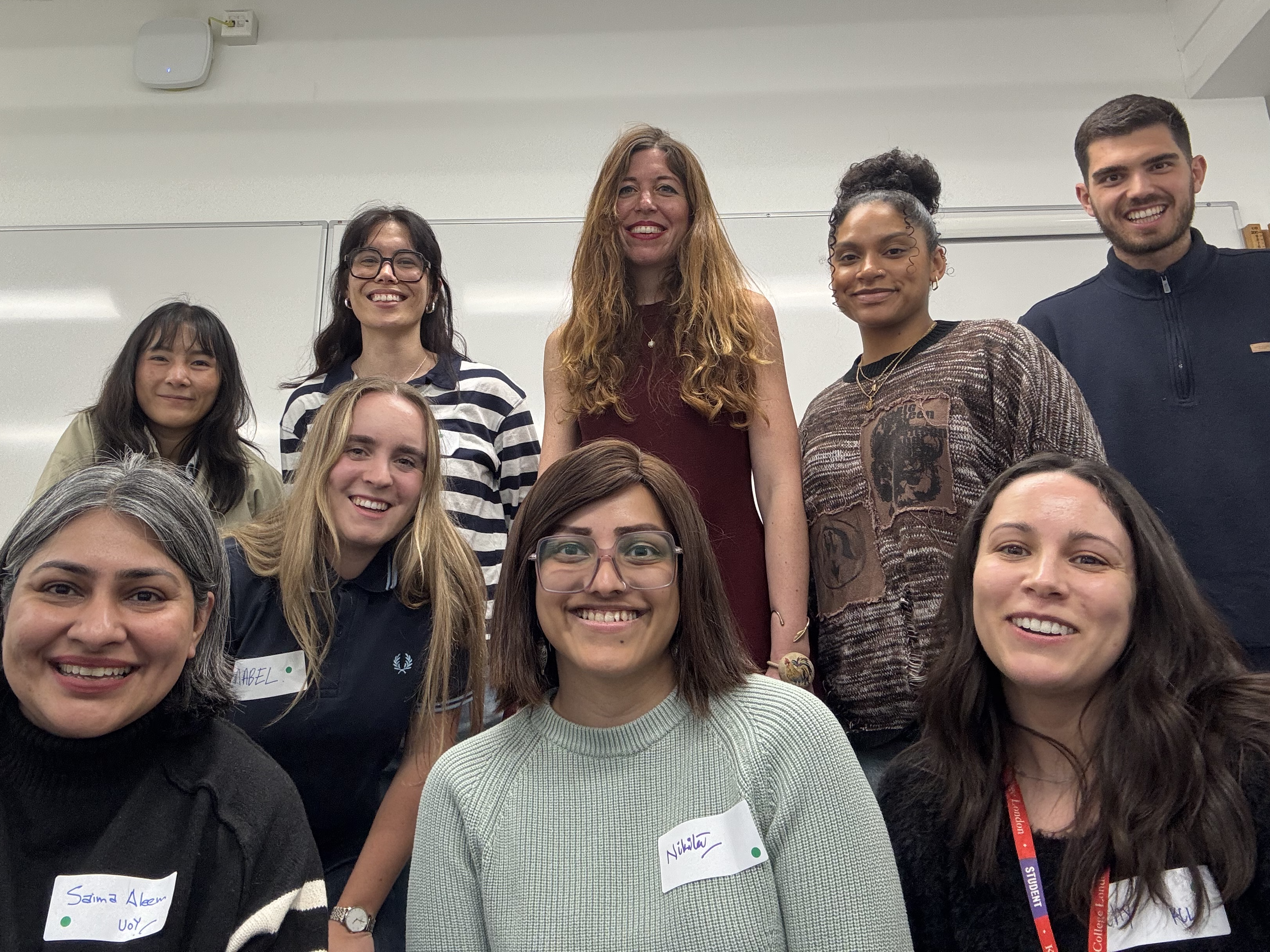
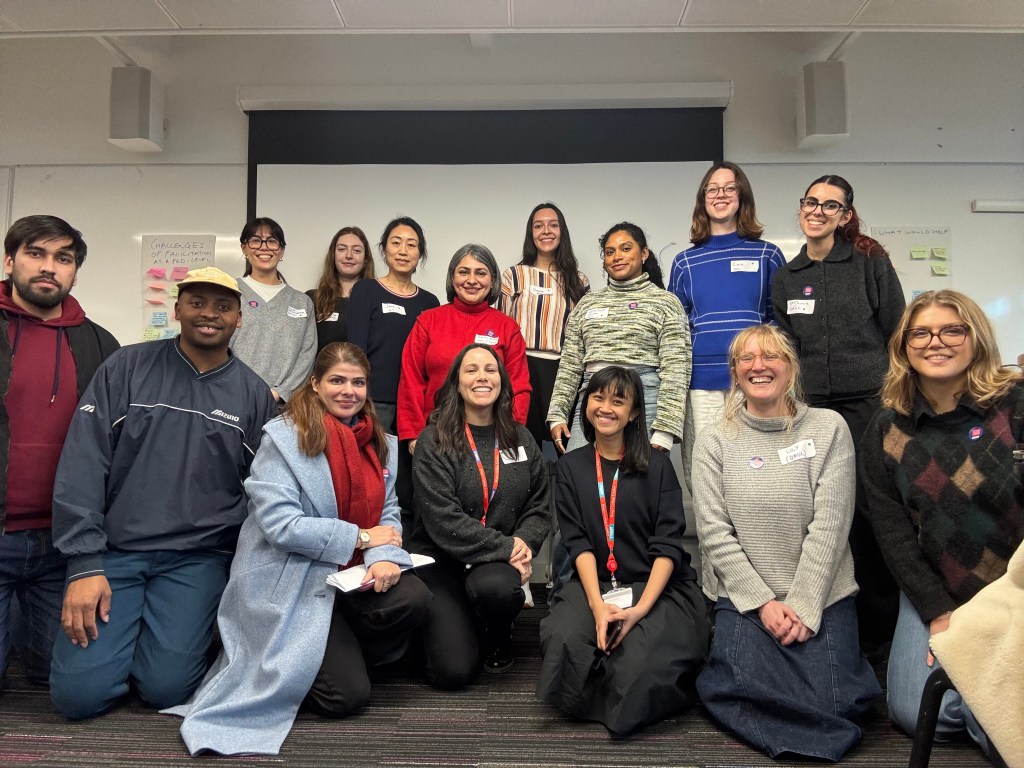
ID: Group photo of session attendees.
Please see below for upcoming network events.
1. PhD Participatory Research Surgery: Q&A Session with Dr Anne-Laure Le Cuff on Wednesday 18th March, 1-2pm (online)
We are delighted to welcome Dr Anne-Laure Le Cunff, who will be hosting an online Q&A session for the PhD Participatory Research Network. The session will provide an opportunity to discuss ideas and questions about participatory research – please come along with your questions and join the conversation!
Sign up via Eventbrite here. The Microsoft Teams link will be sent 48 hours before the session.
2. PhD Participatory Research Network: April Session on Wednesday 1st April, 2-4pm (hybrid)
For this session, we are delighted to welcome Amreen Aslam (PhD Researcher within the collaboratory programme at the University of Nottingham) and Zoe Williamson (Head of Services the National Coordinating Centre for Public Engagement, NCCPE), who will lead a hybrid session on involving community partners or co‑researchers in analysing and interpreting data, with a particular emphasis on what is feasible to undertake within a PhD.
This is a hybrid session. Please register using the appropriate link: in-person attendance or online attendance. The Microsoft Teams link will be sent 48 hours before the session.
3. PhD Participatory Research Network Lunchtime Webinar with Katrina Messiha – Becoming Participatory in Public Health: Theoretical Foundations and Practice of Co-creation on Wednesday 15th April, 1-2pm (online)
We’re delighted to announce the first Lunchtime Webinar hosted by the PhD Participatory Research Network!
We are pleased to welcome Katrina Messiha, Marie Skłodowska-Curie PhD Fellow at Amsterdam University Medical Center, for her talk: Becoming Participatory in Public Health: Theoretical Foundations and Practice of Co-creation
This session will explore the conceptual foundations and practical realities of co-creation and participatory research in public health. Katrina will critically examine key challenges in the field, and introduce theoretical and methodological principles relevant to doctoral researchers working with participatory and co-creative approaches.
Sign up via Eventbrite here, where you can also find further details about the talk. The Microsoft Teams link will be sent 48 hours before the session.
Our February session of the PhD Participatory Research Network brought together PhD students from King’s College London, Queen Mary University of London, Imperial College London, Goldsmiths, University of London, University of York, University of Surrey, and the University of the Creative Arts.
This session brought a mix of returning and new members. We began with introductions from the committee, followed by a smaller space for network members to introduce themselves, including their name, university and area of research.
Reflections from January 2026 session:
Members highlighted several key takeaways from our previous meeting, including:
Emphasising “saying no kindly” and setting boundaries
Navigating complex expectations of others as a PhD student
Remembering ethical considerations with minors and vulnerable populations
Network Updates:
We shared several upcoming network events and opportunities:
Launching our Online PhD Participatory Research Surgery on 25th February (1-2pm) (see end of this blog for more info)
Welcoming Dr. Anne-Laure Le Cunff to our Online PhD Participatory Research Surgery on 18th March (1-2pm)
Upcoming lunchtime webinar with Katrina Messiha on 15th April (1-2pm), who has kindly adapted her talk to themes suggested by our network – details to follow
Introduction to Youth-Led Facilitation Guidelines
This session was hosted by Dr Lily Gilder, Youth Insight Participatory Research Officer at Queen Mary University of London, and Youth Insight Researchers, Jodi Taylor and Stefania Capraru. Together, they offered a practical and thought-provoking exploration of facilitation, what it is, why it matters, and how it shapes participatory research in practice.
Facilitation is often a neglected area of research training, despite being central to creating safe, inclusive participatory spaces.
What is facilitation and why does it matter? Creating a safe, supportive space for all to contribute and manage dynamics.
Why is it important in participatory research? Facilitation influences whose voices are heard and help navigate the sharing of power.
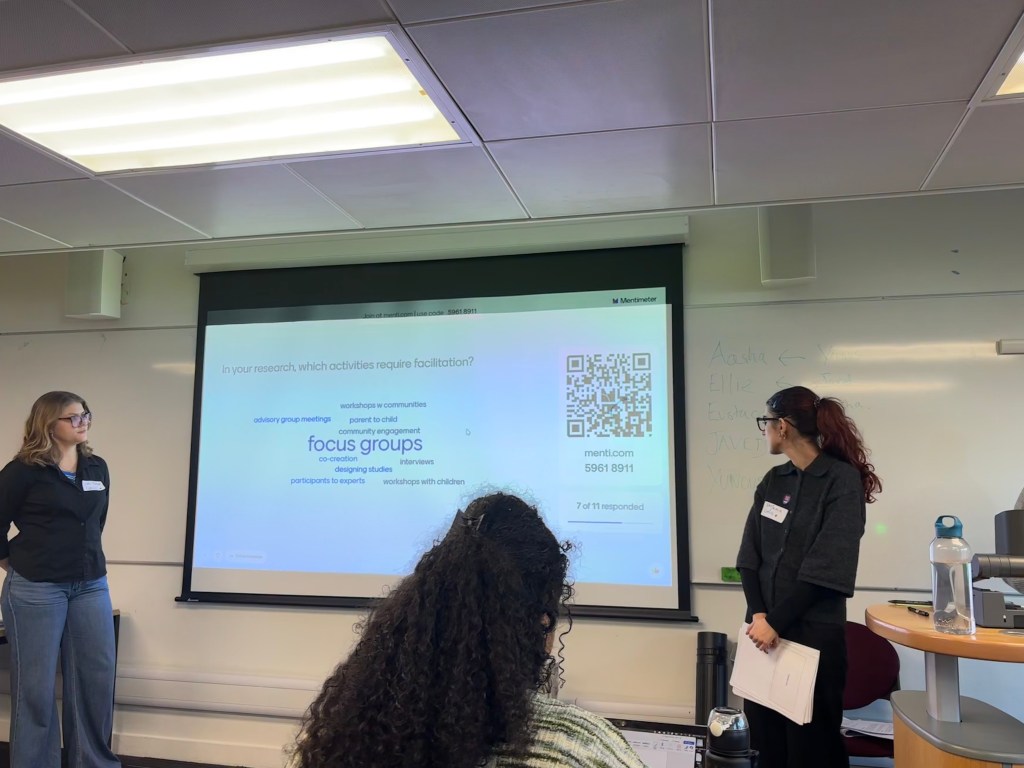
The network contributed to a Mentimeter activity asking: “In your research, which activities require facilitation?”
ID: Jodi and Stefania looking at the slide, which shows Menti findings from “In your research, which activities require facilitation?” The most common response was “focus groups”.
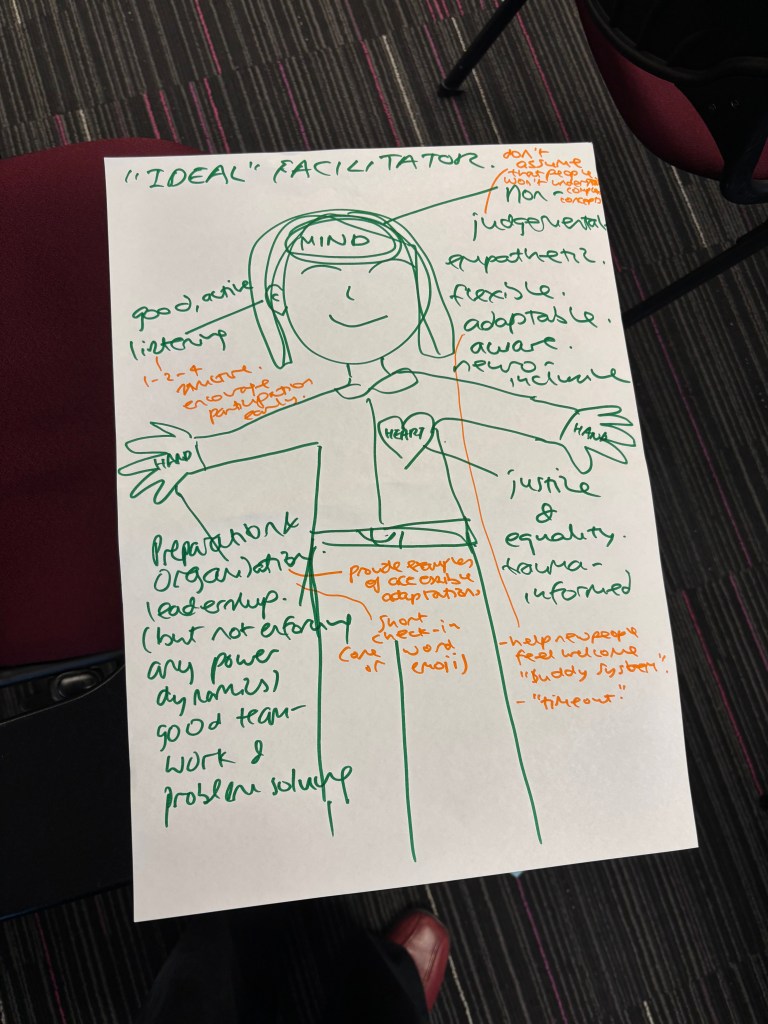
Ideal Facilitator: Drawing Activity
The network participated in an individual activity to think about what an “ideal” facilitator looks like, exploring:
Mind (what knowledge do they have?)
Heart (what values do they hold?)
Hands (what skills do they bring?)
Ideas included empathy, clarity, adaptability, and confidence in managing group dynamics. Members then shared their picture with a partner and practised active listening.
ID: A drawing from the “ideal facilitator” activity – drawing of a person with annotations, including: Mind – non-judgemental, empathetic, flexible, adaptable, aware, neuro-inclusive; Ear – good, active listening; Hand – preparation and organisation, leadership (but not enforcing any power dynamics), good teamwork & problem-solving; Heart – justice & equality, trauma-informed.
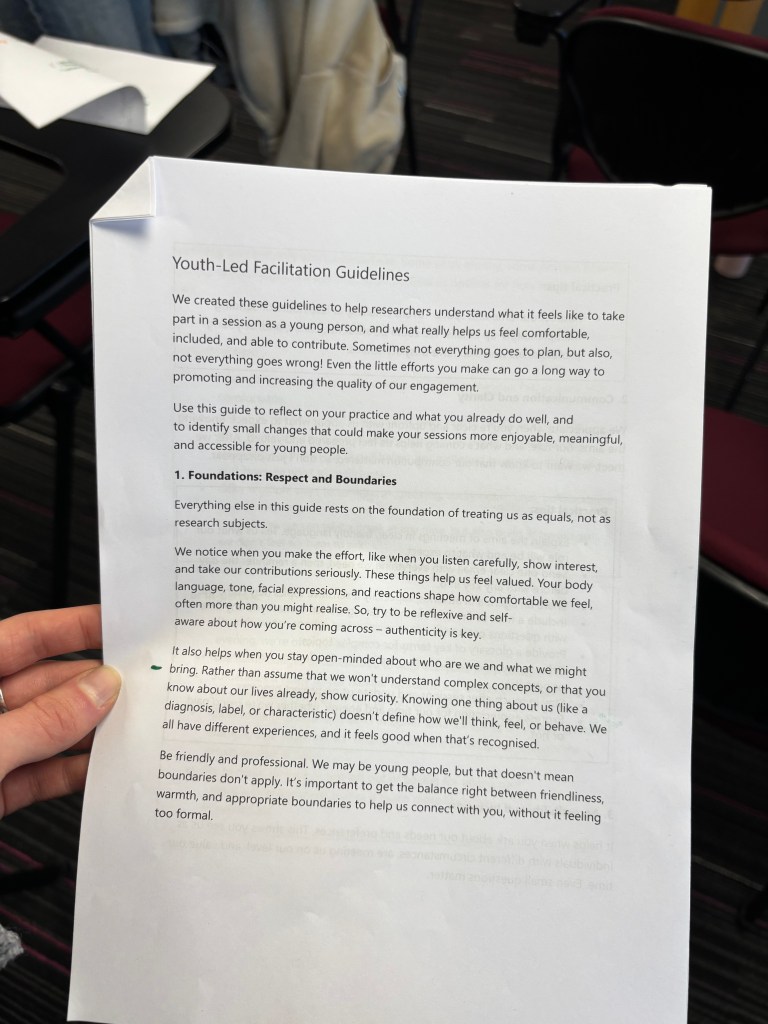
Youth-Led Facilitation Guidelines
Lily, Jodi and Stefania shared their co-developed youth-led facilitation guidelines to the network.
The guidelines are organised around five core themes:
Respect and boundaries
Communication and clarity
Accessibility and inclusion
Safety and trust
Participation and power
ID: Front page of the youth-led facilitation guidelines.
Members reflected on what stood out, what felt most challenging, and how these principles could be applied within their own PhD projects.
Applying the Guidelines in Practice
Members then split into pairs to discuss:
What aspects of the guidelines they are already using in their projects
How useful these principles might be in their own work
How these approaches may be experienced by the young people they work with (or plan to work with)
What else might support effective facilitation with young people
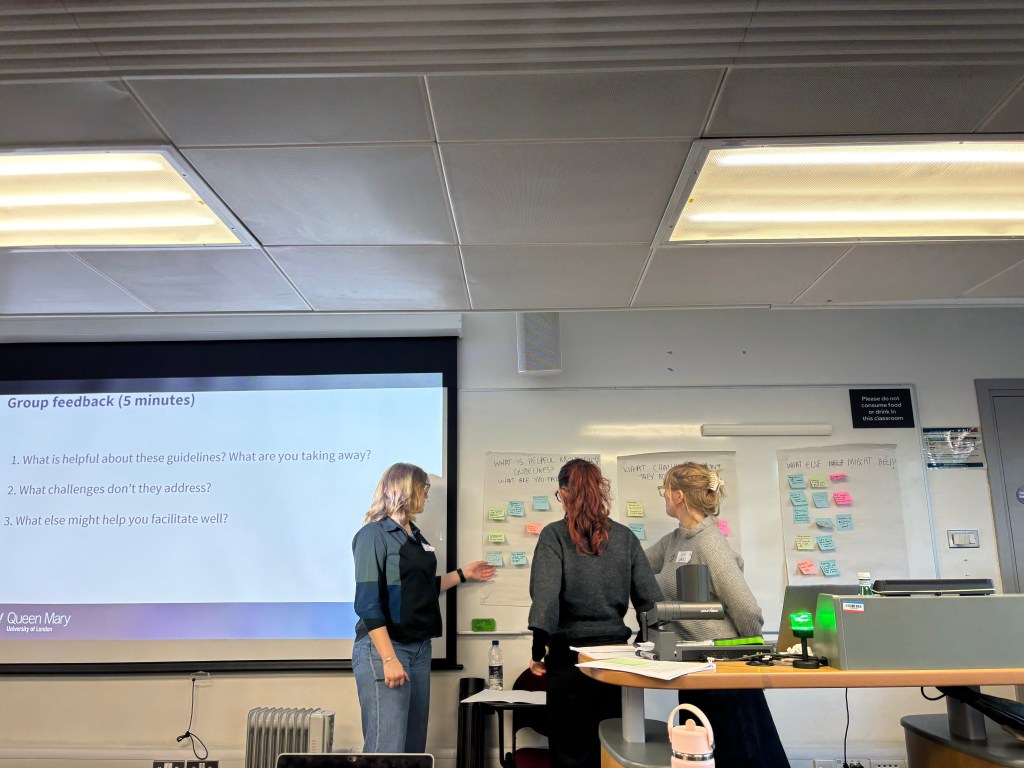
Members then discussed the same questions in groups of 4 and shared these with the wider network.
Conversations highlighted the importance of open-mindedness (not assuming what young people know), active listening, transparency, and reflexivity, particularly when working across differences in age, expertise, and lived experience.
ID: A photo of Lily, Jodi and Stefania pointing to flipchart paper.
Members reflected on practical tips during these discussions and how they would be useful in their research. Some examples that stood out to members included:
Starting the session with a short check-in using one word or emoji
Members reflected that check-in statements like “how are you doing today?” might be too vague at times – having a more set way of checking in would be useful.
Agreeing on a simple ‘time-out’ signal so anyone can step back or take a break
Members reflected that participants may not always feel comfortable to say that they’d like to take a break.
Network members then returned to the drawings they created to reflect on which aspects of their “ideal facilitator” were represented in the guidelines, whether the guidelines supported or stretched their current practice, and whether they would help them move closer to the facilitator they want to be.
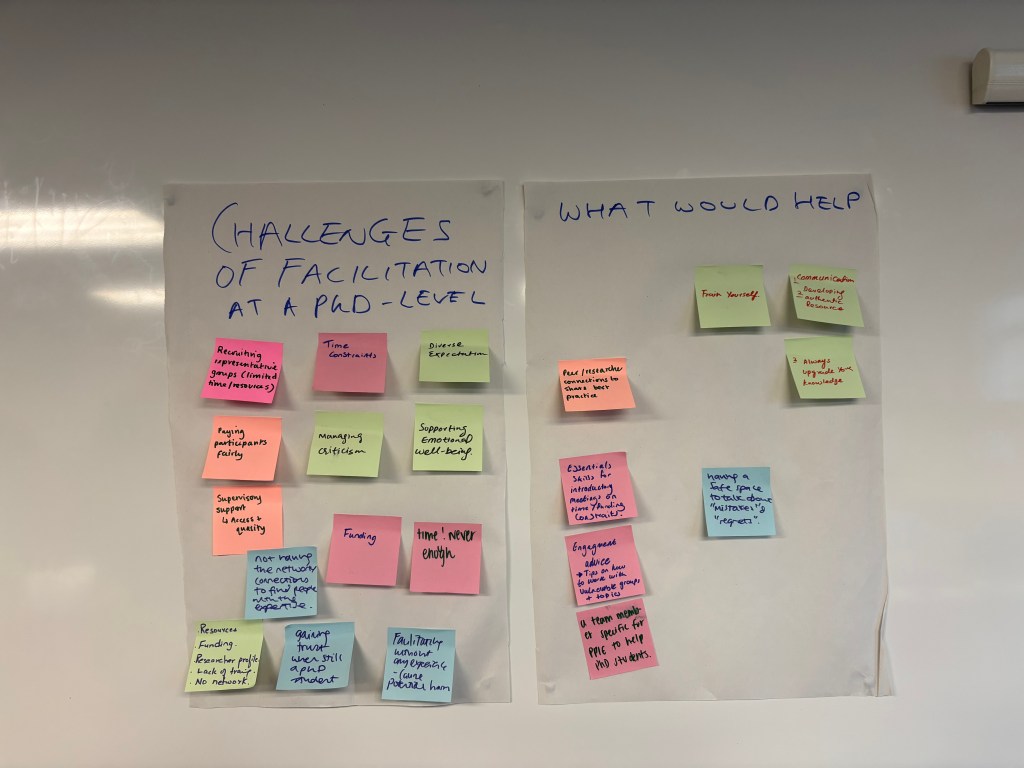
Challenges of Facilitation at PhD Level
Following the workshop, members split into groups to discuss challenges of facilitation within the constraints of PhD research, and what would help.
Key discussion points included:
Time constraints as a PhD student
Paying participants fairly
Diverse expectations within groups
Supporting emotional wellbeing
Supervisory support – access and quality
Recruiting representative groups – limited time/resources
Lack of funding
Limited networks or access to facilitation training
Not having an established researcher profile and having to build trust
Facilitating without any experience and the risk of being “thrown into” facilitation without adequate support, causing potential harm if not done in a safe way
Two recurring barriers were consistently highlighted for PhD students: time and funding.
What would help:
Peer connections to share best practice
Spaces to reflect openly on mistakes, challenges, and learning
Practical guidance for working with vulnerable groups and sensitive topics
Support from team members with dedicated PPIE expertise
Resources tailored to PhD-level constraints
ID: Two sheets of flipchart paper “challenges of facilitation at a PhD-level” and “what would help” with multiple post-it notes on each.
Thank you again to Lily, Jodi, and Stefania for such a thoughtful session, and to all network members for contributing so openly!
ID: Group photo of session attendees.
Please see below for upcoming network events:
1. PhD Participatory Research Surgery: Online Session on 25th February, 1-2pm (online)
Join us for the first session of our online PhD participatory research surgery – a collaborative space for PhD students to discuss ideas, challenges, and questions about their participatory research projects (or simply a space to connect and vent!).
This session will also be a space to collectively think about how we want to run future surgeries. Sign up via Eventbrite here. The Microsoft Teams link will be sent 24 hours before the session.
2. PhD Participatory Research Network: March Session on 4th March, 2-4pm (in person)
For our March session, we will welcome Dr Aoife Sadlier, who will lead a workshop on the role of creative methods in participatory research, with a particular emphasis on what is feasible to undertake within a PhD.
Spaces are very limited for this session, so please register your interest via Eventbrite here. If you can no longer attend, kindly cancel your registration so that someone else can take your spot.
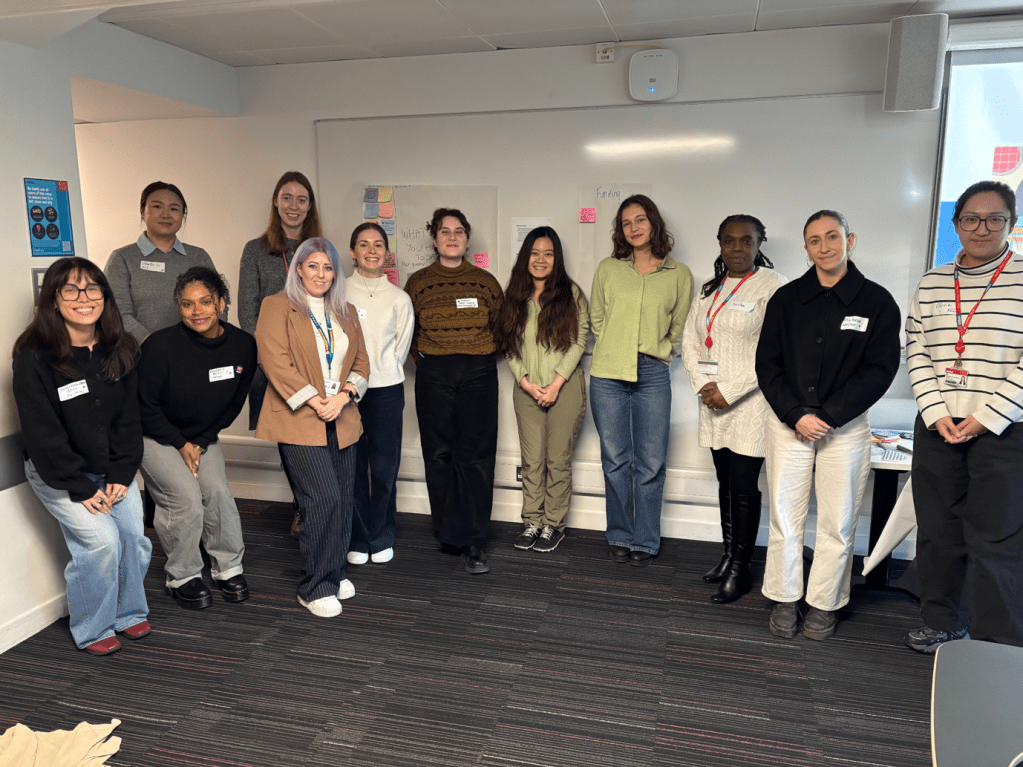
Our third session of the PhD Participatory Research Network brought together PhD students from King’s College London, Queen Mary University of London, Imperial College London, Goldsmiths, University of London, and University of the Arts London. The session was co-facilitated by Emma Hayashibara (QMUL) and Alexandria Bartley (QMUL).
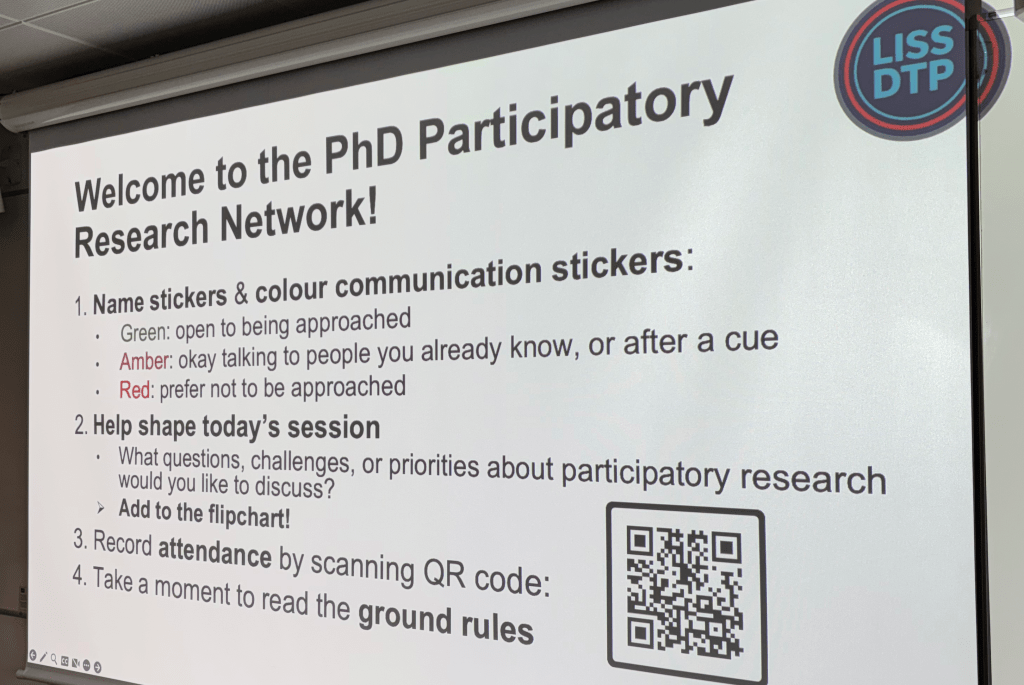
ID: A photo of a slide with the title “Welcome to the PhD Participatory Research Network!” The slide gives instructions for participants: 1) Name stickers & colour communication stickers: Green: open to being approached; Amber: okay talking to people you already know, or after a cue; Red: prefer not to be approached. 2) Help shape today’s session – what questions, challenges, or priorities about participatory research would you like to discuss? Add to the flipchart! 3) Record attendance by scanning QR code. 4) Take a moment to read the ground rules.
Recap from Session 2
We began with a short recap of Session 2 and opened the floor to reflections from the group. Members shared that Kate’s talk had been particularly helpful, especially her emphasis on remaining flexible, valuing quality over quantity, and being transparent with contributors about evaluations and feedback.
Guest Speaker: Louise Ward
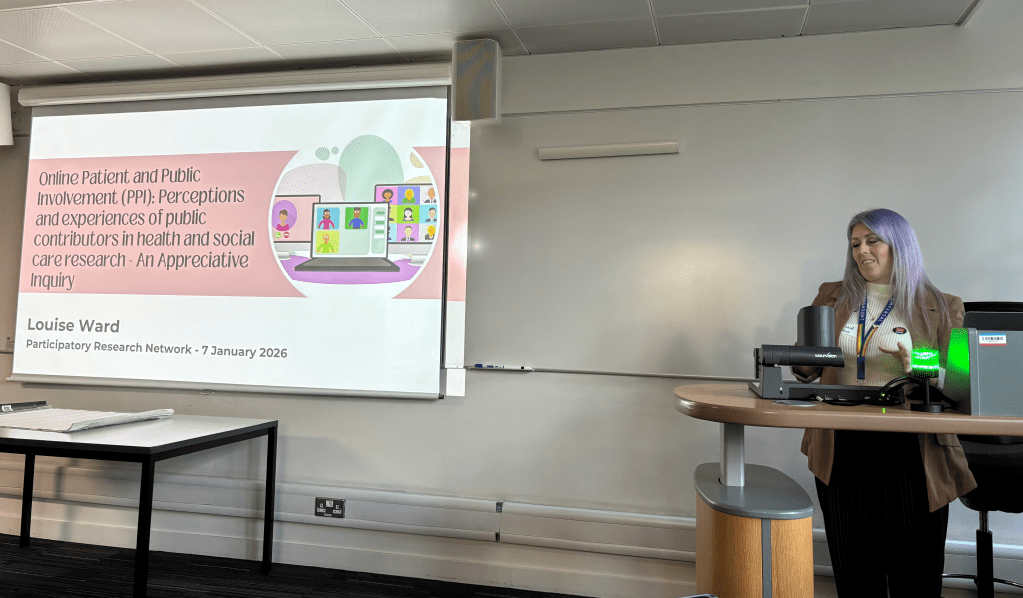
We then welcomed our guest speaker, Louise Ward, a PhD researcher at Bournemouth University and PPIE advisor for Imperial & Partners NIHR Research Support Service/Imperial Clinical Trials Unit. Louise discussed how she’s co-designing her participatory Appreciative Inquiry study with public contributors and the practical lessons learned for PhD-level public involvement and co-production.
ID: Louise presenting her title slide, “Online Patient and Public Involvement (PPI): Perceptions and experiences of public contributors in health and social care in research: An Appreciative Inquiry”
Louise shared her experience of:
Conducting participatory research as a part-time PhD student, while juggling multiple responsibilities
Adapting participatory work to move online almost overnight due to COVID-19
Navigating both the strengths and challenges of online and in-person participatory methods
Louise reflected on why co-design is central to her work, highlighting that it can:
Improve the quality and relevance of research – research truly can’t be for participants if they aren’t involved
Enhance transparency and accountability
Ensure people are given a meaningful voice in research
How Louise co-designs her PhD
Louise described working with:
A public supervisor, who brings both research knowledge and lived experience
An advisory group (the LEAP group), which contributes different perspectives and insights
She also reflected on challenges, including:
Funding difficulties, particularly where public supervisors are not paid staff
The blurred line between a collaborative project and the reality that the thesis ultimately belongs to the PhD student
Practical tips for co-design
Louise shared several practical tips, including:
Co-creating the advisory group’s name together
Considering how the group can contribute at each stage of the PhD (e.g. literature review, ethics, confidentiality)
Giving contributors a genuine choice about how and where they want to be involved
She also introduced the Appreciative Inquiry 4D Cycle (Cooperrider & Whitney, 2005):
Discovery – what works well in online PPI?
Dream – what does the ideal online PPI look like?
Design – how can we move closer to the ideal?
Destiny – what can we do for the vision to become a reality?
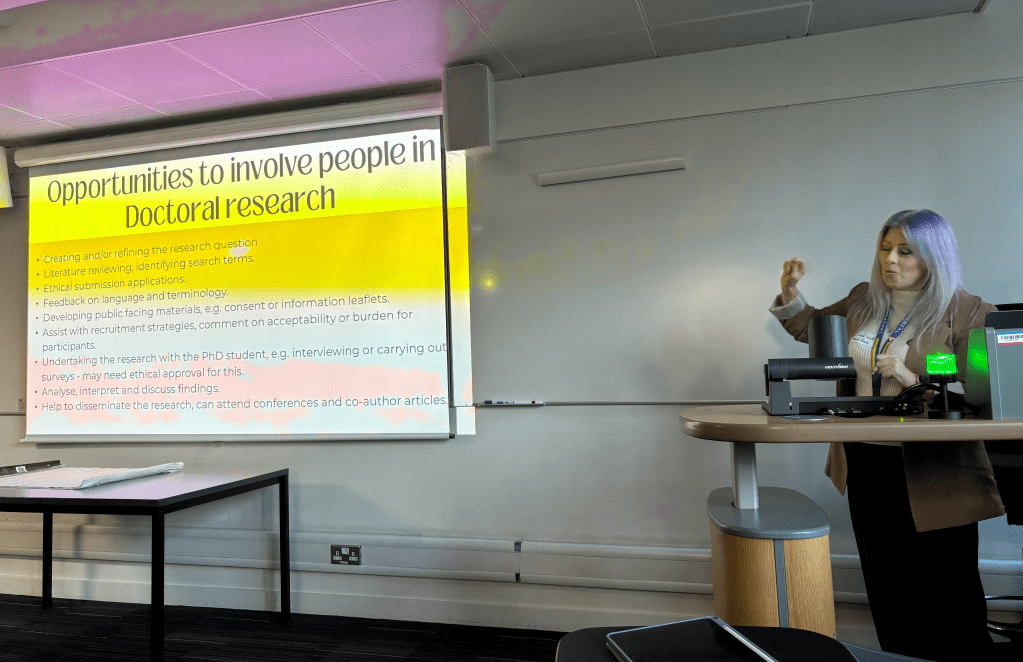
ID: Louise presenting a slide titled: Opportunities to involve people in Doctoral research
Setting expectations and barriers early
Louise emphasised the importance of being clear from the outset about:
The extent of influence contributors have in the project
Budget, timelines, and workload
The reality that not all ideas can be implemented
Practical Skills for Online Participatory Workshops
Louise also reflected on skills that support participatory research in online spaces, including:
Facilitation techniques such as reflective listening, managing group dynamics, and establishing emotional safety
Supporting both yourself as the researcher and the group
Using online facilitation skills such as warm-up prompts, check-ins, and digital whiteboards
Creating psychological safety in digital spaces (e.g., ground rules, different ways to contribute, cameras off if needed)
Reducing digital and cognitive burden (e.g., session length, breaks, materials shared in advance, options to contribute outside meetings)
Clarifying roles, expectations, and boundaries, including skills and comfort levels
Helping contributors feel confident using online tools (e.g. Teams, Mentimeter)
Preparing co-facilitators through pre-meetings and debriefs (e.g., establish clear roles, shared scripts)
Using creative methods (e.g., story-sharing, future vision exercises, digital mood boards, co-mapping experiences) – many methods are possible even without artistic experience
Creating a safe space and recognising that this may look different for each person
Supporting confidence contribution, and voice through reassurance and reflective debrief
Louise also highlighted:
The importance of starting funding applications early
Carefully choosing tools rather than assuming they will work
Starting feedback loops and evaluation earlier in the process
Separating overlapping roles (e.g. supervisors vs LEAP group)
Avoiding tokenism – influence does not need to be large to be meaningful
Working with a small number of contributors – involved early, with continuity and trust
Setting clear expectations, clear roles, and clear limits
Allowing space for two-way feedback (i.e., feedback to the group and the group to the PhD student)
Choosing methods that genuinely support collaboration
Making space to reflect on the process of participatory research, not just the outcomes
Acknowledging that everything often takes longer than expected – and planning for this
Getting the literature review out of the way as early as possible to create space for co-design
Q&A Highlights
Funding and introductions online Louise shared that building comfort and trust takes time, particularly online. Icebreakers can help, but genuine rapport develops gradually. She provided an example of an icebreaker she often uses – “what’s your favourite food?”
Managing mixed group dynamics In situations where group members may feel uncomfortable speaking openly (e.g. mixed groups of children and parents, patients and clinicians), Louise suggested adapting formats – including separate sessions – to support honesty and safety.
Disagreements between supervisors and advisory groups Louise reflected that this is common. For example, a contributor may feel strongly about an idea that a supervisor considers outside the scope of the PhD. In these situations, being transparent about constraints, clearly explaining decisions, and acknowledging the value of contributors’ suggestions can help. She emphasised the importance of saying no kindly and recognising good ideas even when they cannot be implemented, and, where appropriate, keeping a “future projects” log to revisit them beyond the PhD.
From “What brings you here today?” to group discussions
To shape the group discussions, we began with a simple at the beginning of our session. Member were encouraged to write a response to the question “What brings you here today?” on a post-it note and add it to a shared flipchart. This helped surface the key questions and areas of interest that members wanted to explore during the session.
Group discussions: two options
For the group discussions, members were invited to choose between two options, depending on what felt most useful for them.
Option A: Topic of interest
Members could join a group focused on a topic or question that had emerged from the “What brings you here today?” activity. One group chose to focus specifically on working with young people.
Discussions touched on:
Ethics and parental consent
Managing dropouts and follow-up, and how to balance persistence with respect for participants’ time
The need for training when discussing sensitive topics, including how to acknowledge distress while still moving conversations forward
One suggestion was to have a named contact available during sessions, rather than waiting until after a meeting has ended
Challenges accessing schools and organisations, especially when contacts drop off or organisations become unresponsive
Navigating professional roles when entering school spaces, such as entering school spaces as a researcher and former teacher
Members also reflected on broader structural challenges, including:
Limited time and capacity as PhD students compared to larger projects led by senior researchers
The difficulty of recruiting through schools for specific or low-prevalence populations
Whether working with young adults may sometimes be more feasible than working with younger participants
There was discussion around methods, with members noting tensions between more “traditional” approaches (e.g., interviews, focus groups) often encouraged by supervisors and a desire to use more creative, participatory methods. Group composition was also a key theme – particularly whether parents and children, or patients and clinicians, should be involved together or separately. While some saw value in combined sessions at specific points, there was general agreement that this requires careful thought and may not always be appropriate.
Option B: Practice-sharing activity – preparing for participatory workshops
This option offered a more structured discussion space focused on sharing practical experiences of preparing participatory or co-design workshops. Members reflected on:
What worked wellin practice
What they might do differently next time
What they wished they had known before starting
Across these discussions, several shared challenges emerged:
Conducting PPI internationally, where participatory research may not yet be recognised
This included adapting to different technological infrastructures and expectations
Supporting contributors with varying levels of digital confidence, particularly in online focus groups
Members suggested offering opportunities to practise using platforms or tools before sessions begin
Managing group dynamics, such as dominant voices or clashes between participants
Setting clear ground rules at the outset was seen as especially important
Accepting when methods don’t work as planned
Examples included digital tools or forums that seemed promising but were not taken up by groups, highlighting the need for flexibility and open discussion with contributors
Networking self as a PhD students – developing a platform as a PhD student as opposed to larger, more established projects
Members also shared examples of what had worked well, such as using visual summaries after meetings, setting clear agendas to structure sessions, and building in preparation time for participants.
There was a shared sense that many of these questions do not have simple answers, and that they require ongoing reflection and collective learning. This reinforced the value of the network as a space to think through these challenges together, rather than in isolation.
Members closed the session by reflecting on the guilt many PhD students feel when structural constraints prevent research from being as participatory as they would like. This resonated strongly with the group.
Session reflections
The structure of guest speaker followed by group discussion worked well
Guest talks helped prompt new lines of reflection
Flexible session formats supported different needs
Members suggested creating more space to share external events, talks, or resources
There was discussion around whether grouping members by research stage might be helpful in future sessions
Registration is now open for the February session of the PhD Participatory Research Network!
Our next session will be held on 4th February, from 2-4pm, in Room 1.62, Franklin Wilkins Building, King’s College London.
Come and join fellow PhD students to explore how participatory values can be embedded in PhD-level research!
Our second session of the PhD Participatory Research Network brought together PhD students from King’s College London, Queen Mary University of London, Imperial College London, and Goldsmiths, University of London. This session was co-facilitated by Emma Hayashibira (QMUL) and Cheyenne Contreras (KCL).
Recap from Session 1 We began with a quick reflection on our first meeting. Members shared that they appreciated the friendly environment and the sense of “not being alone” in navigating participatory approaches within the constraints of PhD research. Cheyenne reiterated that the network is a collective learning space, shaped by and for its network members. In response to Session 1 feedback, future sessions will continue to prioritise PhD-led discussion, rather than set out structures. This also ensures that the network is tailored to everyone’s needs, particularly as everyone is at a different stage in their participatory journey.
Guest Speaker: Kate Fifield (contact: kate.fifield@kcl.ac.uk)
We welcomed our guest speaker, Kate Fifield, a postdoctoral researcher at King’s College London. Kate discussed the barriers and successes she encountered while integrating PPI into her PhD feasibility study on digital assessment technology for young adults with a rare genetic disease.
ID: Kate presenting with a slide titled “PPIE – EVALUATION” in the background.
Key reflections included:
How different everyone’s experience will be Kate highlighted that every researcher’s experience with PPI will look different, and this will shape how you plan and engage with involvement work.
When planning PPI It is important to think carefully about the people you are engaging with and how this may influence involvement – for example, whether they may be considered vulnerable and what additional considerations this may require (e.g. ethics applications, communication styles).
Remaining flexible Kate emphasised that things may overrun or not follow the original plan. Being adaptable is essential when working with people.
Working with groups Take time to make group members feel comfortable. Get to know them, and help them get comfortable with each other too, such as hosting an introduction session.
Providing relevant information Offer clear explanations of what PPI is, key terms, and an overview of the study. Give members an opportunity to shape their role and accommodate their preferred ways of being contacted and involved.
Difficulties as a PhD student Kate discussed the challenge of maintaining a PPI group from start to finish during a PhD, especially with limited funding and support. Kate’s advice: prioritise quality over quantity.
Q&A Highlights
How to deal with small groups and dropouts Kate recommended having a backup plan – for example, a waiting list of people who have expressed interest or an alternative recruitment strategy.
When to apply for ethics Kate shared that she did not need ethics approval for her PPI group because members were not study participants. Other network members discussed their experiences applying for ethics, particularly when working with minors (requiring parental consent) or vulnerable groups.
Evaluations – when is it too much? A question was raised about how often to use evaluations or feedback forms without overwhelming participants. Kate suggested discussing this openly with the group – explain why evaluations are needed and agree together on what feels manageable and how often they should be completed. Evaluations do not need to happen after every session, and many groups prefer something like every other meeting.
Small Group Discussions
To kick off the small group discussions, each member wrote on a post-it note and added it to a shared flipchart under the prompt “What brings you here today?” This simple activity helped surface the key questions and discussion points that members wanted to explore during the session. These collective contributions then shaped the main themes for the next part of the session.
ID: Flipchart paper “What brings you here today? Main questions, discussion points…”
Three main themes emerged, including: ethics, funding, and recruitment. The network split into two groups and discussed ethics and recruitment.
Group Discussions: Ethics &Recruitment
Ethics
Timing: When to apply for ethics? Many members shared uncertainty about the overall timeline – when ethics, recruitment, and funding should happen within a PhD project. While the group agreed that securing funding is almost always the first step, the timing of ethics applications and recruitment can vary widely depending on the study design and the population involved (e.g., vulnerable groups). Institutional processes also differ, so students should discuss timelines with supervisors and/or ethics committees. This was identified as an area that would benefit from clearer guidance in our toolkit.
When does PPI need ethics? The group also discussed when participatory research, particularly advisory groups, requires ethics approval. Many members noted that they did not need ethics to start an advisory group, as members were not study participants. However, attendees felt it would be helpful for the toolkit to include a section outlining what situations wouldrequire ethics and what considerations PhD students should keep in mind when working with advisory groups.
Power dynamics & co-designing A question was raised about how to manage power dynamics when co-designing a study with advisory group members and other researchers, especially when differing views emerge. The group agreed that differences of opinion are common. As the researcher, it can be helpful to discuss these points with your supervisor and, if something is not possible to implement, clearly explain this to the group and outline the reasons why.
Informing participants Members reflected on how much detail to provide when informing participants about their role and the study. Some shared that, in hindsight, they wished they had spent more time on this. An introductory session can be especially valuable to ensure group members fully understand their role and the work ahead. It is also important to hear from the group and discuss how they feel they can contribute – shaping roles collaboratively from the beginning of the process.
Recruitment
Finding the right recruitment pathways Members reflected on how much detail to provide when informing participants about their role and the study. Some shared that, in hindsight, they wished they had spent more time on this. An introductory session can be especially valuable to ensure group members fully understand their role and the work ahead. It is also important to hear from the group and discuss how they feel they can contribute – shaping roles collaboratively from the beginning of the process.
Voluntary vs funded involvement The group reflected on how to communicate whether participation is voluntary or paid. Being transparent early on helps manage expectations and ensures involvement is fair and accessible.
Building trust Researchers highlighted the value of showing who they are, adding a personal touch, being clear about motivations, and building trust, especially when working with vulnerable groups.
Sensitive topics Members emphasised being mindful of vulnerability, staying reflexive about personal experiences, and making space for debriefing and self-care.
Adapting to different groups Age ranges, backgrounds, and previous experiences can shape how people respond to recruitment. Tailoring communication to each group was seen as good practice.
ID: Group photo of network members taken at the end of our session with the presentation slide “PhD Participatory Research Network” in the background.
Reflections from Session 2
There is a strong need for practical, PhD-specific guidance, particularly around ethics, recruitment, and structuring PPI/participatory groups.
Reflections from guest speakers offer valuable insights into what participatory research looks like in reality.
Registration is now open for Session 3 of the PhD Participatory Research Network!
Our next session will be held on 7th January, from 2-4 pm, in Room 1.16, Franklin Wilkins Building, King’s College London.
Come and join fellow PhD students to explore how participatory values can be embedded in PhD-level research!